Send five factories the same one-line RFQ – “please quote your best 50W LED floodlight” – and you will receive five different products at five different prices, none of which you can compare, and none of which may be the lamp you had in mind. This is not the factories being difficult. A quotation is an answer to a specification, and a one-line RFQ has no specification to answer. What comes back is a best guess wearing a price tag.
The fix costs one or two hours of writing. A two-page specification sheet – not a works of art, just a structured list of values with tolerances – changes the quality of every document that follows: the quote you receive, the sample you evaluate, the proforma invoice you sign, and the inspection checklist your goods are finally checked against. This article walks through the blocks that make a lighting specification quoteable, with real examples from our own product range published on this site, and ends with a template and a checklist you can reuse on your next RFQ.
The quotation can only be as good as the specification
Understand first what happens on the factory side when your RFQ arrives. A sales engineer reads it and starts filling gaps. If you did not state a voltage, they assume the variant that sells most in your region – or the only one they stock. If you did not state a flux tolerance, they assume the generous end. If you did not state packaging, they quote plain brown cartons, and the price you received quietly excludes the retail box you were picturing.
None of this is deception; it is arithmetic under uncertainty. But every assumption a factory must make gets priced defensively, and two days later you are comparing quotes that answer different questions. The specification sheet exists to remove the assumptions. It is the single document in the whole transaction that the buyer fully controls – so it pays to control it well.

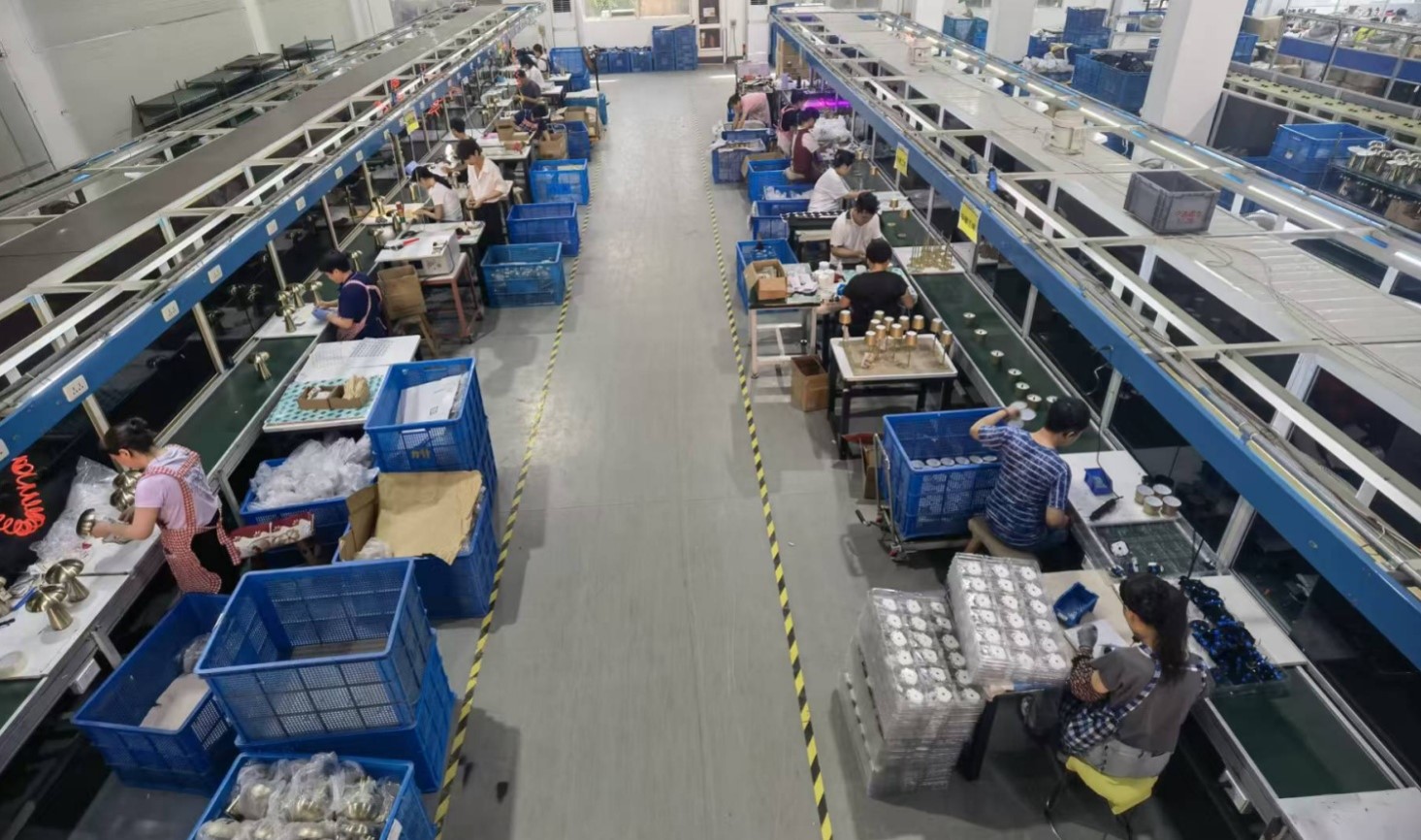
LED floodlights on the line. The quote, the sample and the final inspection should all trace back to one version-numbered specification.
What a factory needs before it can price a lamp
A quoteable specification is built from seven blocks. You can remember them as a sequence: the first says what the lamp is for, the middle three say what the lamp is, the last three say what delivering it involves.
- Identity and application – working title, destination market, the scene it will be used in, and a target price band if you have one.
- Electrical – voltage and frequency, plug type per market, cable, switches and sensors.
- Photometric – flux with tolerance, colour temperature options, CRI, beam angle.
- Mechanical and environmental – IP rating, materials, dimensions, mounting, temperature range.
- Compliance and documentation – which standards apply, which documents exist for the exact model, who holds the originals.
- Packaging and marks – boxes, cartons, quantities, weights, artwork.
- Commercials with tolerances – order quantity, what may vary and what may not.
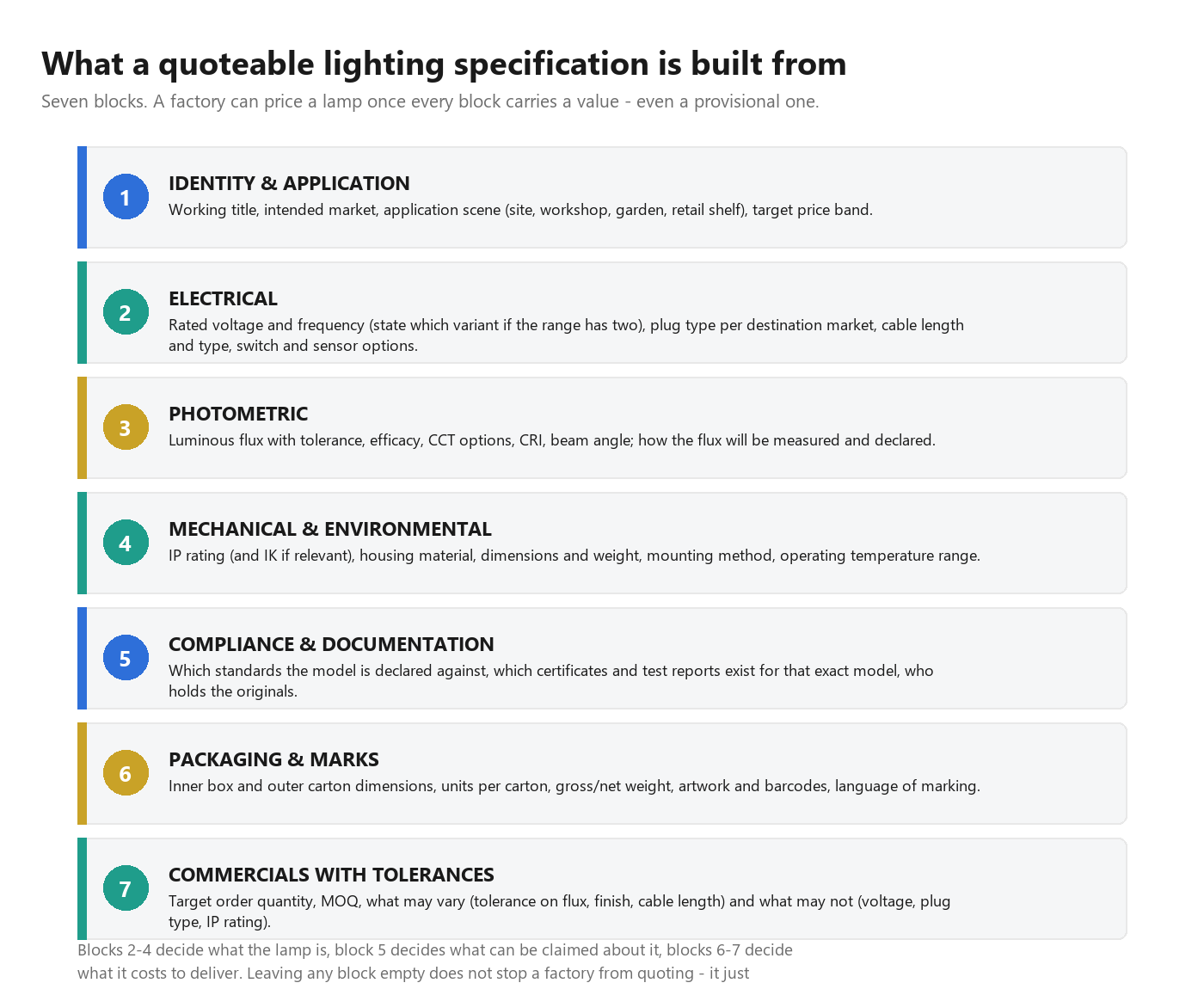
The seven blocks of a quoteable specification. Blocks 2-4 decide what the lamp is; block 5 decides what can be claimed about it; blocks 6-7 decide what it costs to deliver.
The rest of this article goes through the blocks that cause the most trouble in practice: electrical, photometric, mechanical, packaging – and the tolerances that hold the whole thing together.
Start with the application, not the wattage
The most common opening line in a lighting RFQ is a wattage, and it is the least useful number to start from. A 50W floodlight for a home driveway and a 50W floodlight for a construction site share almost nothing except the figure on the label – different housing, different mounting, different IP expectations, different cable.
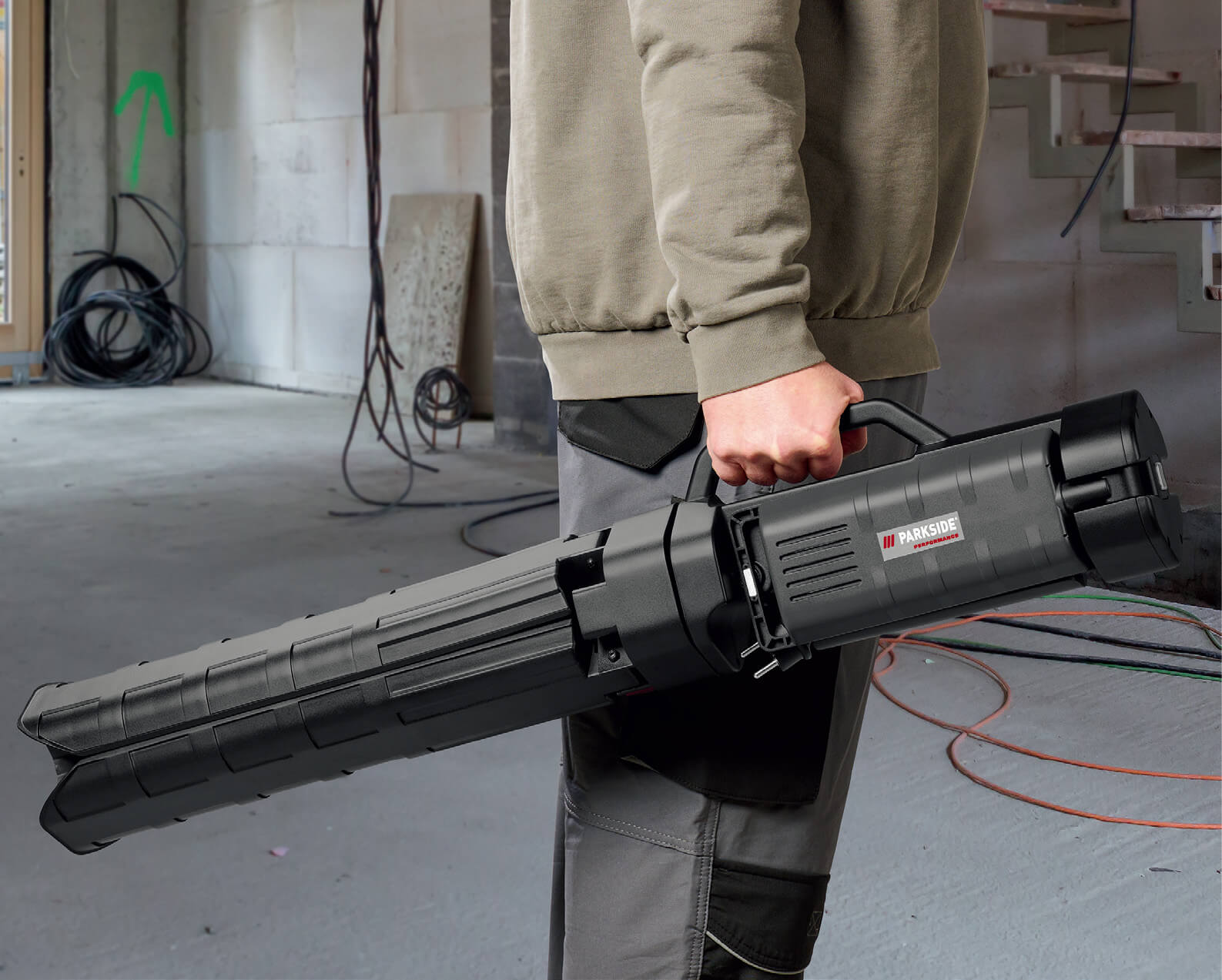
Describe the scene instead: where the lamp will be mounted, how high, how long it runs per day, whether it is moved between sites, and what it must survive. A work light on a telescopic tripod and a flat wall-mounted floodlight exist as separate products precisely because the applications diverged – one needs height, stability and portability, the other needs a slim housing and a fixed bracket. The factory will steer you to the right family faster from one honest sentence about the application than from any number of wattage guesses.
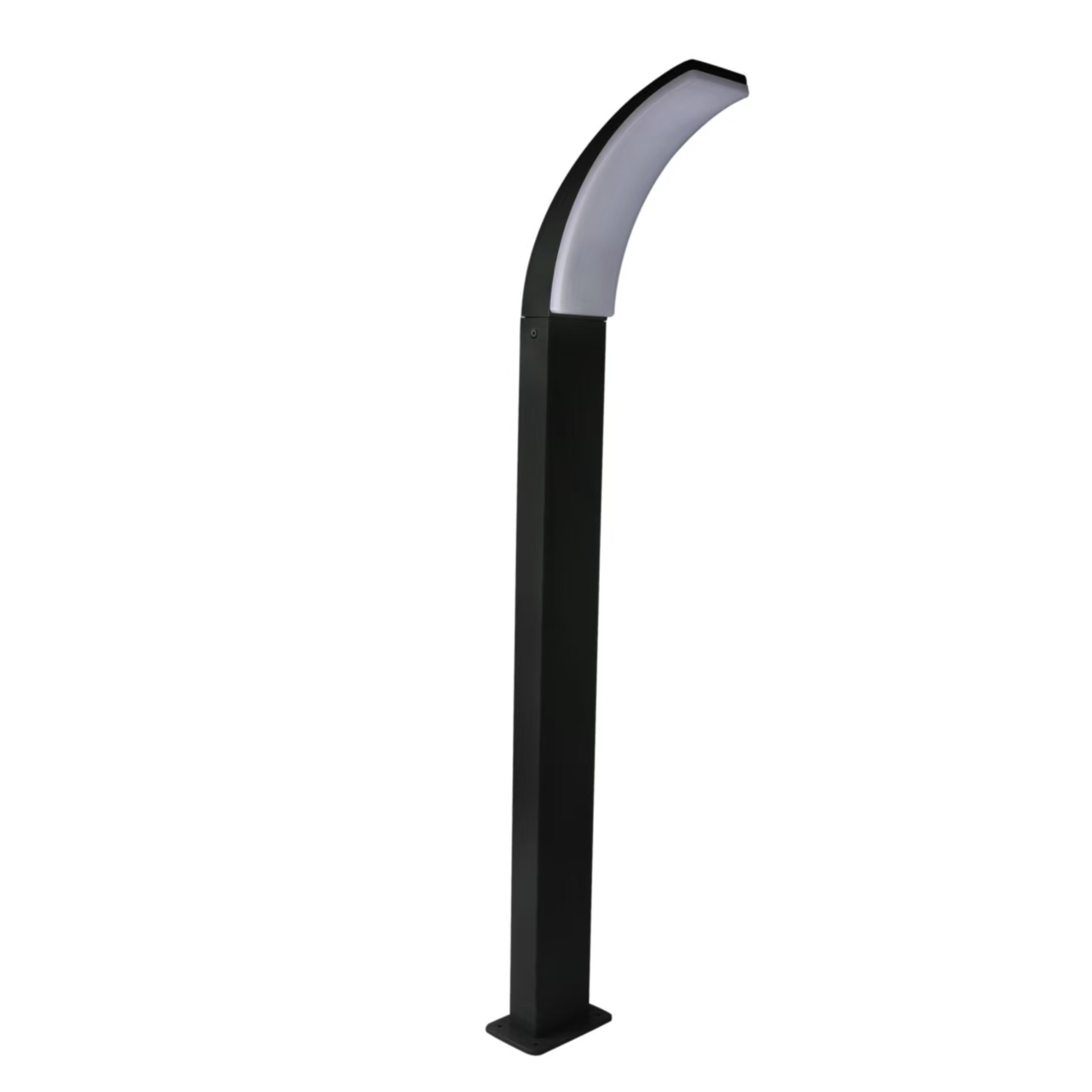
Cordless lamps add a further layer to the application brief: charge time, runtime, battery replacement. Battery-powered products carry additional rules of their own – see our battery regulation article.
The electrical block: voltage variants, plugs and cable
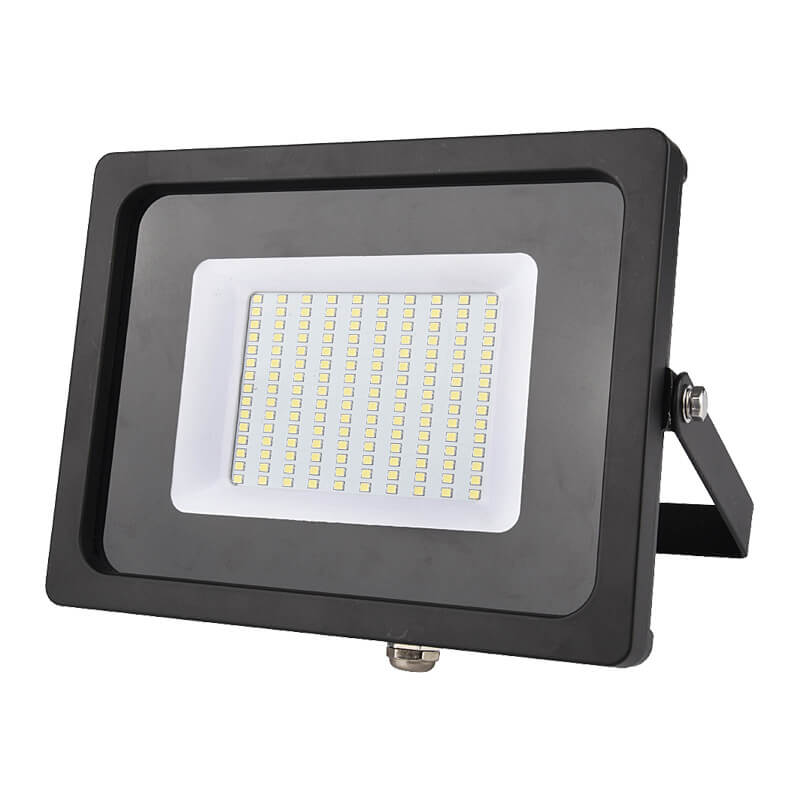
Electrical details are where assumptions do the most damage, because the answers differ within a single product family. On this site, most of the flat floodlight range is published with a dual voltage line – “110-130V OR 220-240V” – meaning the buyer must confirm which variant they are actually being quoted. Meanwhile a newer 2×50W plastic work light (D-911) is published at 220-240V only. Two similar-looking products from the same supplier, two different voltage answers. If your specification does not name the variant, the factory may quote either.
Three rules of thumb make the electrical block quoteable:
- Name the voltage variant, not a range. Write “220-240 V, 50 Hz variant” rather than “wide voltage”. If the family has two variants, say which one this order is for.
- Name the plug per destination market. A Germany-bound socket order needs a different plug pattern from a UK-bound one, and the two product families are kept separate on purpose – see our guides to German-type extension sockets and UK-type extension sockets. Market-by-market detail is in our plug standard article.
- Specify the cable like a component. Length, sheath type and whether the cable is fixed or detachable. “3 m H05RN-F” is a value; “good cable” is a hope.
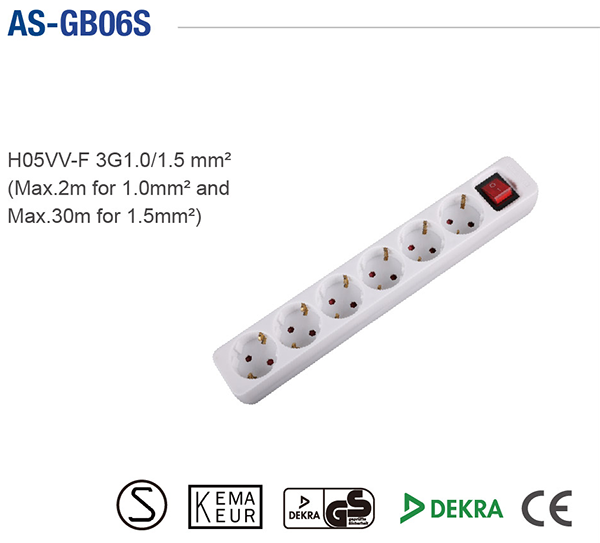
Extension sockets: plug type, number of outlets, switch and surge-protection options are all per-order decisions worth writing down.
The three real models below are published on this site right now. Same supplier, same broad family – and look how different the rows are:
| Row | D-206D work light, tripod | D-501D flat floodlight | D-911 work light, 2-head |
|---|---|---|---|
| Power | 20W | 50W | 2×50W |
| Published flux | 1,800 lm | 4,500 lm | 9,000 lm |
| Efficacy (implied) | ~90 lm/W | ~90 lm/W | ~90 lm/W |
| Voltage line | 110-130V OR 220-240V | 110-130V OR 220-240V | 220-240V only |
| Power factor | >0.5 | >0.9 | >0.5 |
| IP grade | IP65 | IP65 | IP54 |
| CCT options | 3000/4000/6500K | 3000/4000/6500K | 3000/4000/6500K |
Values as published on the product pages of this site, checked November 2026.
Two lessons hide in that table. First, the voltage answer differs inside one range – which is exactly why the specification must pin it. Second, the power-factor threshold moves with wattage (the >0.9 value appears at 50W, the >0.5 value at 20W and 2×50W), which mirrors how supply-side requirements are commonly structured; if your market has a specific threshold above 25 W, name it in the specification and let the factory confirm in writing.
The photometric block: flux, colour and beam
Photometrics is the block where vague wording is most expensive, because “bright” has no unit. Three fields make it quoteable:
- Luminous flux with a tolerance. “≥ 4,500 lm initial flux, tolerance ±10%” gives the factory room to be honest and gives you grounds for complaint if a sample measures 3,800. Without a tolerance, you have agreed to nothing.
- How the number will be declared. Ask whether the flux on the datasheet is measured or estimated, and which measurement method stands behind it. A factory that can name its measurement process is telling you something a bare number cannot. Our datasheet-reading guide covers what to look for when the sheet arrives.
- CCT options as a list, not a preference. The floodlight range above is published at three colour temperatures. If your project needs one of them, say which – quoting all three “just in case” prices every variant into the tooling.
CRI and beam angle complete the block. Most professional-grade ranges publish CRI >80 and a 120° beam, as the models above do – but confirm, do not assume, and if your application needs a narrower beam, that is a different optical design worth flagging early.
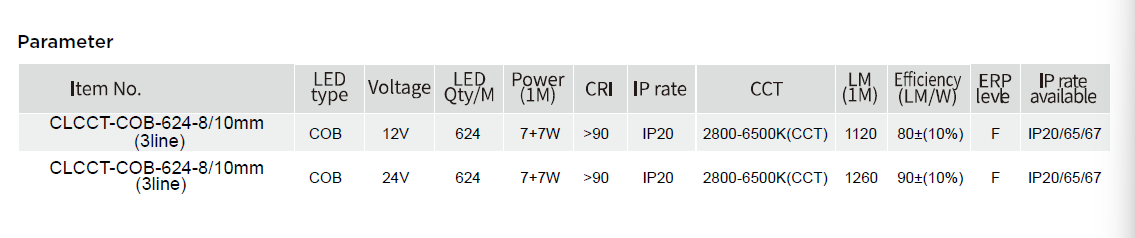
A published parameter table for a COB LED strip. Good specifications from both sides look like this: one value per row, one row per parameter.
The mechanical block: IP, materials and dimension drawings
The mechanical block is where engineering vocabulary pays for itself. Specify the ingress-protection grade by the two-digit code and, where relevant, the standard behind it – our IP rating guide explains what each digit means under IEC 60529 and why outdoor products also deserve questions about cold, salt fog and UV beyond the IP number.
Materials and mounting go in the same block: aluminium versus plastic housing, bracket versus tripod versus magnet, and the dimensions that decide whether the lamp fits the box you have in mind. Where the factory has published dimension drawings, reference them – they are the drawing the packaging will be engineered around.
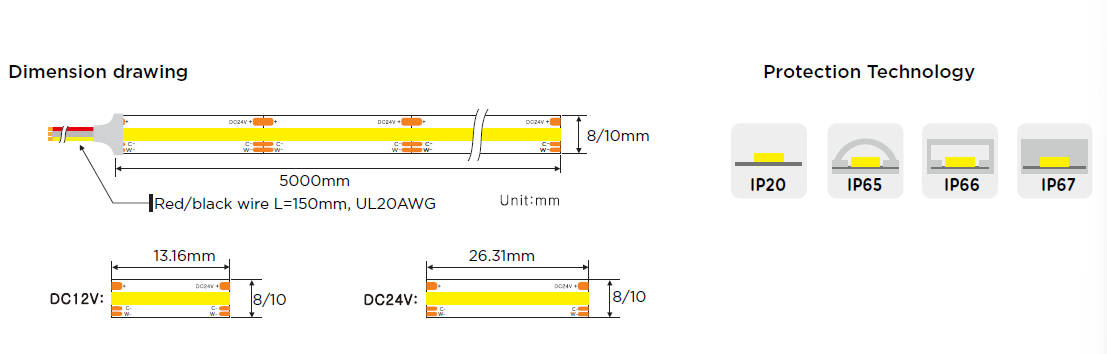
A dimension drawing published alongside the strip’s parameter table. Dimensions are not decoration – they are the input to every packaging decision downstream.
The packaging block: the rows nobody fills in
Packaging is the most-skipped block in buyer specifications, and the most expensive to skip. In a routine audit of product pages on this very site, we found exactly this gap: a recently added work light page lists inner box, outer carton, carton quantities and gross weight – all empty. The engineering rows are complete; the logistics rows are blank. Buyers who order that lamp without asking will discover the carton answer at the forwarder’s quotation stage, not at the RFQ stage.
Write the packaging block before you ask for prices, not after:
- Inner box dimensions and type (plain, colour, or full retail artwork).
- Outer carton dimensions and units per carton.
- Gross and net weight per carton – this is what the sea-freight quote will be built from.
- Marks and barcodes, and the language of any on-product or on-box marking.

Carton data belongs in the specification sheet. Every week of delay in writing it down is a week added to the freight quotation.
Vague wording versus quoteable wording
With the blocks in place, the writing itself has one rule: every line either contains a value or asks a question. Everything else is decoration. The fastest way to upgrade your own RFQ is to run it against the pairs below.
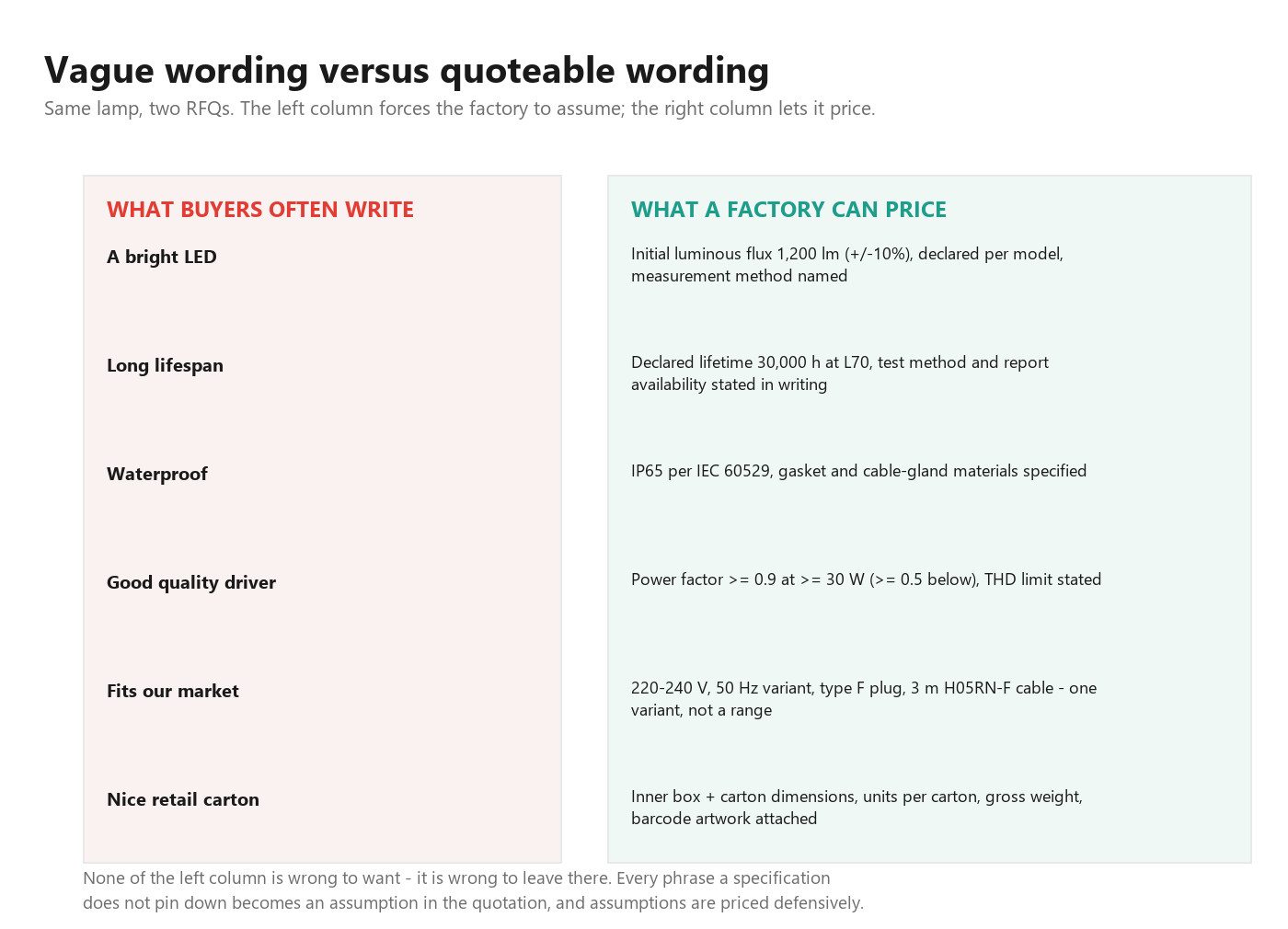
The same six requirements, written twice. None of the left column is wrong to want – it is wrong to leave there.
Notice what the right-hand column adds: units, tolerances and named references. “IP65 per IEC 60529” is a checkable claim; “waterproof” is a mood. A factory receiving the right-hand column can price it, sample it and stand behind it – which is precisely what you want.
A specification template you can copy
Here is the whole sheet as a template. Copy it into your next RFQ and fill every row – provisional values are fine as long as they are marked provisional:
| Block | Field | Example value |
|---|---|---|
| Identity | Product working title / market / scene | “Site work light, DE market, construction sites” |
| Electrical | Voltage & frequency (one variant) | 220-240 V, 50 Hz |
| Electrical | Plug type | Type F (Schuko) |
| Electrical | Cable | 3 m, H05RN-F, fixed |
| Photometric | Initial flux with tolerance | ≥ 1,200 lm, ±10% |
| Photometric | CCT / CRI / beam | 4000 K only / CRI ≥ 80 / 120° |
| Mechanical | IP grade & standard reference | IP65 per IEC 60529 |
| Mechanical | Housing / mounting | Aluminium body, bracket mount |
| Compliance | Documents to confirm in writing | Which certificates/test reports exist for this exact model; copies on request |
| Packaging | Inner box / carton / units / weights | To be proposed by factory, then fixed |
| Commercials | Order qty & tolerances | 1×20′ container trial order; flux tolerance ±10%; voltage and plug not changeable |
Template rows are examples, not recommendations – replace every value with your own requirement.
From specification to quotation: how the documents connect
The specification does not live alone. It sits at the head of a chain of documents, and each one inherits its quality:
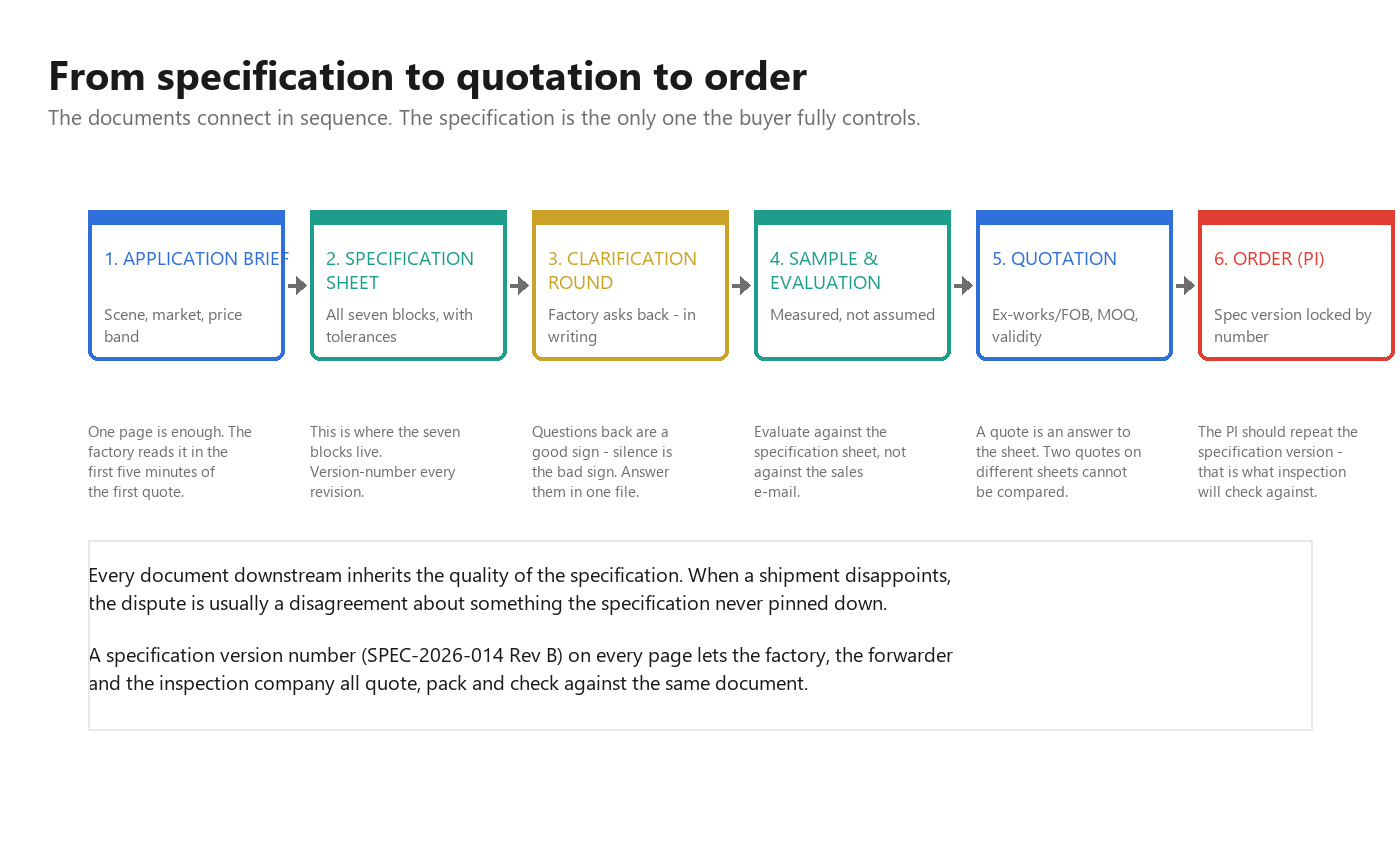
The chain from application brief to proforma invoice. The specification sits second in the chain and determines the quality of everything after it.
Two habits make the chain work. First, version-number the specification – “SPEC-2026-014 Rev B” – and require the version number to appear on the quotation and the proforma invoice. When the factory, the forwarder and the inspection company all reference the same document, disputes shrink to disagreements about facts instead of disagreements about memory. Second, put changes in writing. A revision agreed on a phone call is a rumour; a revision sent as “Rev C” is a document.
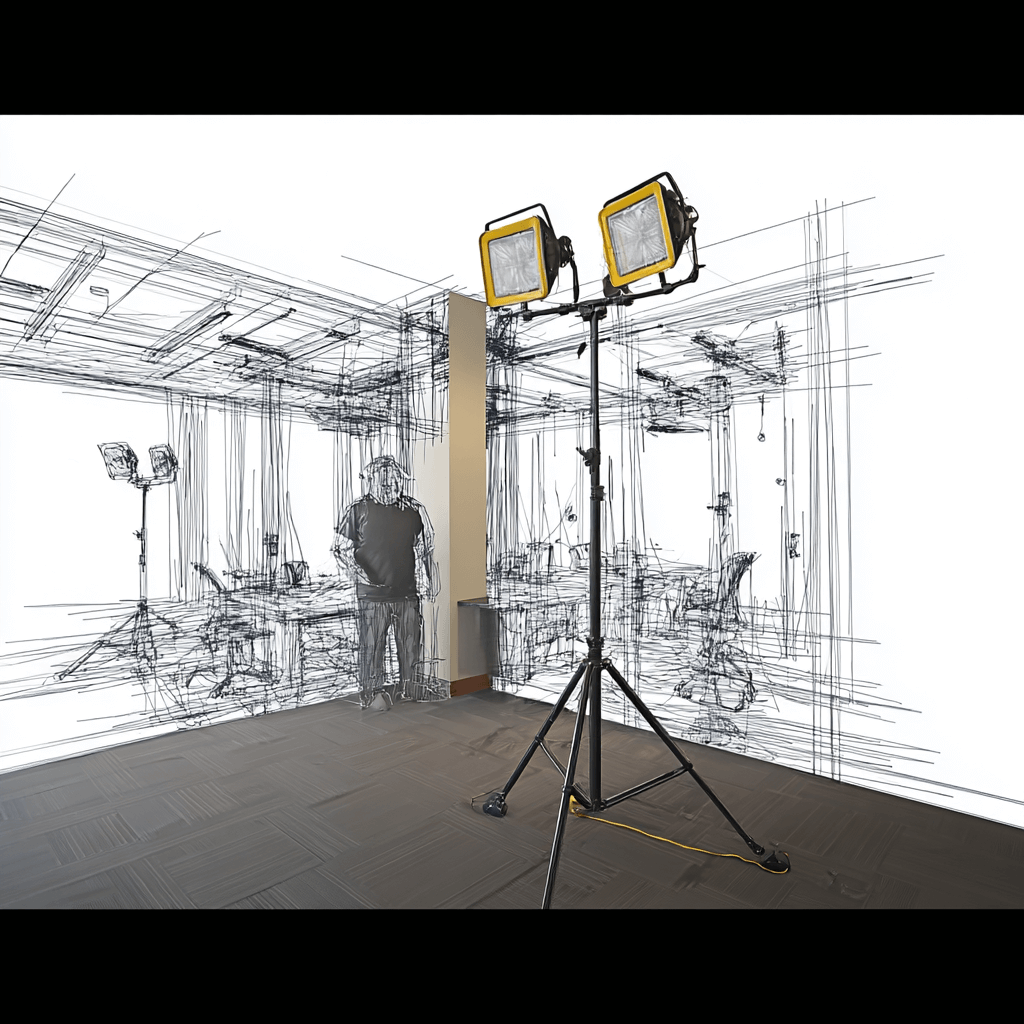
The version on the proforma invoice is the version the production line should build to – that is the whole point of version numbers.
What a good supplier asks back
A specification sheet does something else that RFQ senders rarely expect: it gives the factory something to push against. The factories worth working with will answer your sheet with questions – “the flux tolerance at ±10% is beyond what we would declare without a measurement report, can we agree ±5% with reporting?” or “the retail carton you sketched exceeds our standard carton by 20mm; do you want us to price the custom carton separately?”
Treat questions back as a quality signal, not friction. A supplier who silently accepts every line is often just accepting every ambiguity. And if a quotation comes back without referencing your sheet at all, that tells you the price was built from assumptions – which is exactly what the sheet was meant to prevent.
Ten questions to answer before you send the RFQ
- Which voltage variant – one variant, named?
- Which plug pattern per destination market?
- Cable: length, type, fixed or detachable?
- Initial flux, with tolerance, and how it will be declared?
- CCT options – which one, or which ones, for this order?
- IP grade, with the standard referenced, plus any environmental extras the application demands?
- Housing material and mounting method?
- Which certificates and test reports exist for this exact model, and who holds the originals? (Ask; do not assume.)
- Packaging: inner box, carton, units per carton, gross weight – proposed by whom, fixed by when?
- What may vary, what may not – tolerances written down?
If you can answer all ten in one document, you will not just receive faster quotes – you will receive quotes that describe the same lamp, priced on the same assumptions, ready to be compared line by line. That is the entire advantage of writing the specification first, and it is available to any buyer willing to spend two hours on a page.
Specifications referenced in this article reflect product pages published on this site as of November 2026. Where your market sets specific electrical or documentation requirements, confirm them with your supplier and, where relevant, with the competent authorities in the destination market before ordering.
about
Symbol Industrial
Supplier of outdoor lightings and electric products in China.