
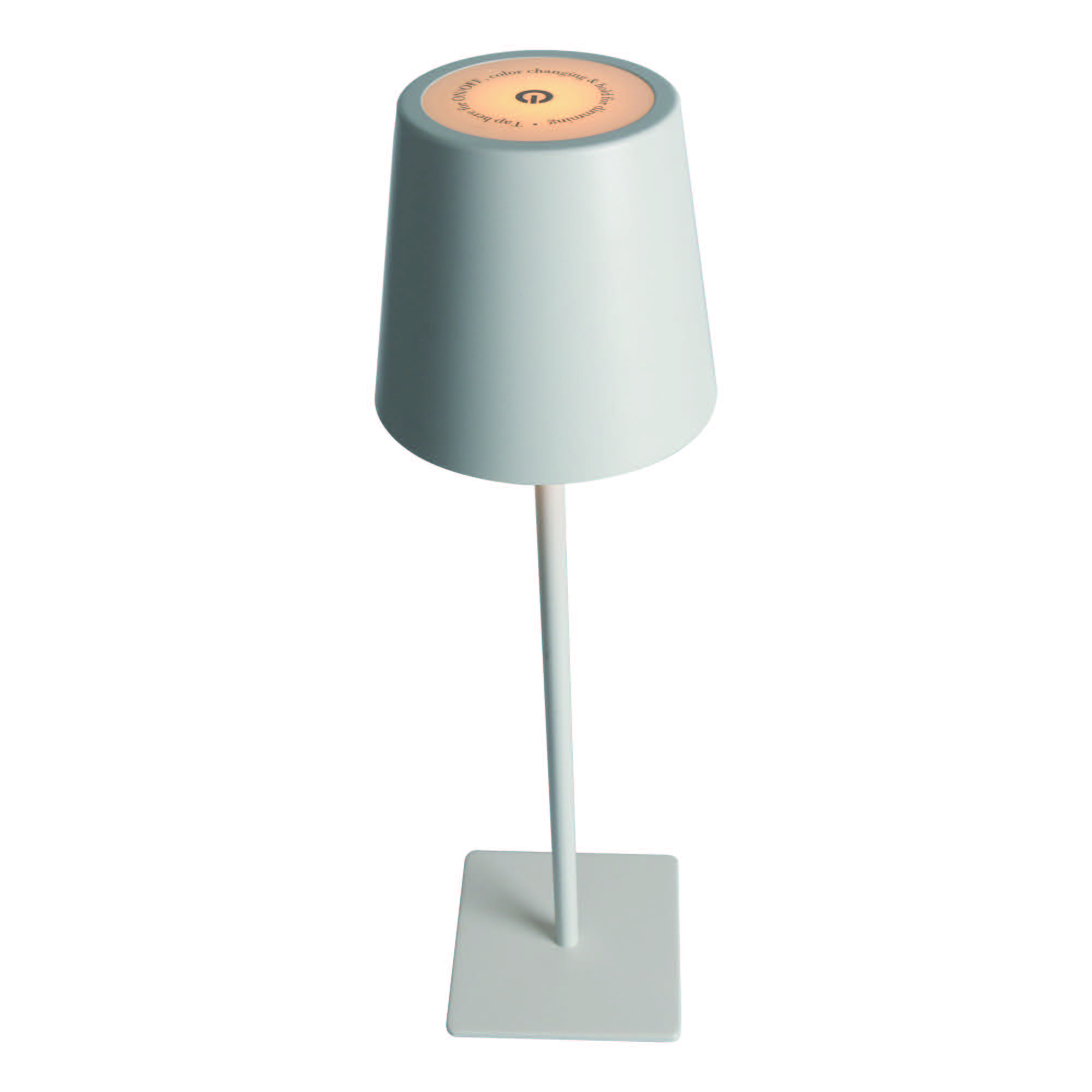
If you buy or specify rechargeable LED lamps — table lights, portable work lights, rechargeable site lighting — there is a date you should already have in your development calendar: 18 February 2027.
That is when Article 11 of the EU Battery Regulation (EU) 2023/1542 starts to apply. And unlike a labelling deadline, this one is decided in the tooling, not in the artwork file. Products designed after today that do not meet it will need a new housing.
What Article 11 actually requires
For portable batteries — batteries under 5 kg that are not industrial or EV batteries — incorporated into appliances, the regulation requires that the end user can remove and replace the battery themselves.
In practice that means:
- The battery can be taken out without damaging the battery or the product.
- Removal is possible with commercially available tools. If a special tool is genuinely needed, it must be supplied free of charge with the product, and proprietary tools are not acceptable as the everyday solution.
- The user must be able to replace the battery with another compatible battery available on the market — so software or firmware may not be used to lock a product to the manufacturer’s own replacement pack.
- Instructions for safe removal and replacement must be provided.
- Spare parts, including batteries, must remain available for five years after the last unit is placed on the market.
The obligation applies to the battery as a whole, not to individual cells inside it, and it applies to the end user — a person of ordinary skill, with no special training.
Batteries that are glued, potted, spot-welded into a sealed assembly, or reachable only after the housing is destroyed do not meet the test. This is the point that catches lighting products.
Why rechargeable lamps are exposed
A rechargeable table lamp is usually designed around two competing demands: a clean, sealed, weather-resistant shell, and a low bill of materials. Sealing a battery inside a glued or ultrasonically welded housing is the cheapest way to satisfy both — and it is exactly what Article 11 rules out.
Rechargeable portable lamps — cordless table lights, silicone night lights, portable work lights — are the category Article 11 covers. The design question is where the battery bay goes.
There is a real design tension here. An IP-rated outdoor luminaire needs its optical chamber to stay watertight and dust-tight. Article 11 requires a battery compartment a customer can open. These two things can coexist, but only if the battery compartment is designed as a separate, gasketted bay that does not breach the sealed optical and driver section. That is a mechanical architecture decision, and it has to be made before tooling is cut.
The exemption list is being widened — do not build a plan on it
The European Commission has acknowledged the safety logic: in some products, letting an untrained user open the housing creates a bigger risk than a sealed battery. In April 2026 the Commission published a draft supplement to Article 11 proposing to broaden the categories where battery replacement may be reserved to an independent professional. The categories under consultation include products that must stay watertight because they are routinely washed or immersed, professional medical equipment, miniature sealed wearables where opening the case would destroy water and dust protection, certain rechargeable toys, food-contact temperature probes, equipment for explosive atmospheres, on-body drug delivery devices, and telematics units fitted to agricultural and construction machinery.
Two cautions if you are reading this from a purchasing desk:
- An exemption removes the end-user removability duty only. The product must still be supported by a professional repair channel, and the full technical documentation obligations still apply.
- The list is a draft. If your product is not clearly inside one of those categories, design for replaceability. Waiting for the final text and then re-tooling is the expensive path.
Timeline worth keeping in the file
| Date | Obligation |
|---|---|
| 17 August 2023 | Battery Regulation enters into force |
| 13 December 2024 | GPSR applies, adding its own documentation and responsible-person duties on top |
| 2026 | Battery labelling requirements apply |
| 18 February 2027 | Article 11 removability and replaceability applies to portable batteries |
| 2027 | QR code requirements apply |
| 30 June 2027 | The old Battery Directive is repealed |
| End of 2027 | Portable battery collection target of 63 % (rising to 73 % by end of 2030) |
What “designed for replaceability” looks like in a lamp
A practical specification for a rechargeable luminaire going into the EU after February 2027:
- A screwed or latch-secured battery door, openable with a coin or a commercially available screwdriver.
- A standard cell format or a standardised pack — 18650 or 21700 cells in a replaceable holder, or a plug-in pack with a keyed connector — rather than a potted assembly unique to the model.
- Connector, not solder, between pack and board, so the user is not handling a soldering iron.
- A gasketted battery bay isolated from the optical chamber, so the IP rating of the light engine is unaffected by the user opening the door.
- Battery compartment labelled per Annex VI, and the manual carrying the removal and replacement instructions and the battery disposal route.
- No firmware lock on third-party compatible batteries.
- A spares plan that keeps packs available for five years, in writing.
Six questions to ask a supplier about a new rechargeable lamp
- Can the end user remove and replace the battery with a commercially available tool? Show me the part of the drawing or the manual that covers it.
- Is the cell in a standard format, or proprietary? What will a replacement cost in year four?
- Does opening the battery door compromise the IP rating of the optical chamber? What rating applies with the door open and closed?
- Can the unit run on a third-party compatible battery, or does firmware refuse it?
- What is the spare battery part number, and for how many years is it guaranteed to be available?
- Will the delivered unit meet Article 11 on the date it is placed on the EU market — not on the date it was designed?
If a supplier cannot answer the first one with a drawing, the answer is no.
What we do
We design and produce outdoor lighting and electrical products in Ningbo for importers and distributors, with the EU market in mind from the tooling stage rather than after it. Our rechargeable table lights range and portable lighting products can be specified with a user-replaceable battery bay — tell us your target market and your IP requirement and we will confirm the architecture before quoting.
For a deeper look at the compliance obligations that sit alongside the battery rules, see our note on what EU importers now ask a Chinese lighting supplier.
about
Symbol Industrial
Supplier of outdoor lightings and electric products in China.

blog tags
related posts

September 23, 2026