
The EU General Product Safety Regulation — Regulation (EU) 2023/988, universally shortened to GPSR — has now been in force for over a year, having applied since 13 December 2024 in place of the old General Product Safety Directive.
It did not change which products are considered safe. It changed who has to be able to prove it, and to whom. For a non-EU manufacturer, the practical effect is a new set of questions arriving from European importers — and a supplier who can answer them quickly wins orders that a cheaper competitor loses on paperwork.
The single change with the biggest commercial impact
Under GPSR, a product from a manufacturer established outside the EU cannot be placed on the EU market unless there is an economic operator established inside the EU who takes responsibility for specific compliance tasks. In practice this is the EU importer, or a dedicated representative appointed by the manufacturer for the purpose.
That person’s name, address and electronic contact details must appear on the product, on its packaging, or on an accompanying document — and on the online product listing where the product is offered for sale.
The consequences of not having one are not theoretical. Goods can be blocked at the border, and listings can be removed from online marketplaces.
This is the item that most often delays a first shipment, because the artwork is printed before anyone asks who the responsible person will be.
What the importer has to be able to produce
European importers are now on the receiving end of market surveillance enquiries. What they need from you is a document set that survives that scrutiny:
- Technical documentation including a risk assessment: what the product is, what hazards were identified, and which standards were applied to address them.
- Retention of ten years after the product was placed on the market, available to authorities on request and in a language they can understand.
- Traceability records reconstructing the chain from supplier to customer, retained for six years, so that a product can be located if corrective action is needed.
- An internal complaints and recall register.
- Accident notification through the Safety Business Gateway where a product is involved in an accident with serious adverse health effects.
- A recall procedure offering consumers at least two remedies among repair, replacement or refund, using the mandatory recall notice template.
None of that is work a factory can improvise in the week before a container leaves. It is the case for building the file at product development stage.
Your product listing is part of the product
GPSR was written with online selling in mind. Distance-selling rules mean the safety information — warnings, product identification, manufacturer details and the responsible person — has to be visible at the point of sale online, not only on the carton that arrives afterwards.
For importers selling through their own web shop or through marketplaces, this is a listing-data problem: fields, attributes and images all have to carry the right information. When you supply product photography and copy, include the safety labelling in it. It removes a step for your customer and it is one fewer reason for them to look at an alternative source.
Two roles that are constantly confused
The CE marking authorised representative and the GPSR responsible person are different roles with different legal bases and different tasks. An importer acting as responsible person for GPSR is not automatically the authorised representative for CE purposes, and the reverse is equally true.
A product carrying CE marking does not escape GPSR. The regulation applies on top of sector-specific legislation such as the Low Voltage Directive, EMC and RoHS, for the aspects those instruments do not already cover — traceability, the responsible person, accident reporting and recalls.
If a supplier tells you CE is enough, that answer is out of date by more than a year.
The compliance pack worth sending unprompted
If you want EU importers to take you seriously, assemble these seven items and attach them to your offer, before anyone asks:

CE and UKCA sit alongside WEEE and recycling marks on lighting products — each one backed by documentation, not by the mark alone.
- Declaration of Conformity, naming the product and the standards applied.
- EU responsible person details, in writing, with a contactable email address.
- Technical file summary — product description, relevant standards, and the risk assessment section.
- Test reports from an accredited laboratory, with report numbers.
- Label artwork showing manufacturer identification, product identifier, batch or serial number, safety warnings and the responsible person’s details.
- Traceability statement — how a batch can be traced from your factory to a specific customer shipment.
- Complaints and recall contact — who at your company handles a safety issue, and in what timeframe you respond.
Most of this is one afternoon’s work when it already exists and is simply scattered across email threads. The value is in having it as one document.
Where shipments usually go wrong
- The responsible person was never appointed, and packaging was printed without the name.
- Details exist on the carton but not on the online listing.
- The importer changed, and the artwork was not updated.
- The technical file exists in Chinese only.
- Safety warnings are present but not in the language of the destination market.
- Traceability stops at the container number rather than at a batch identifier.
Each of these is cheap to fix in advance and expensive to fix after the goods have shipped.
How we work with EU buyers
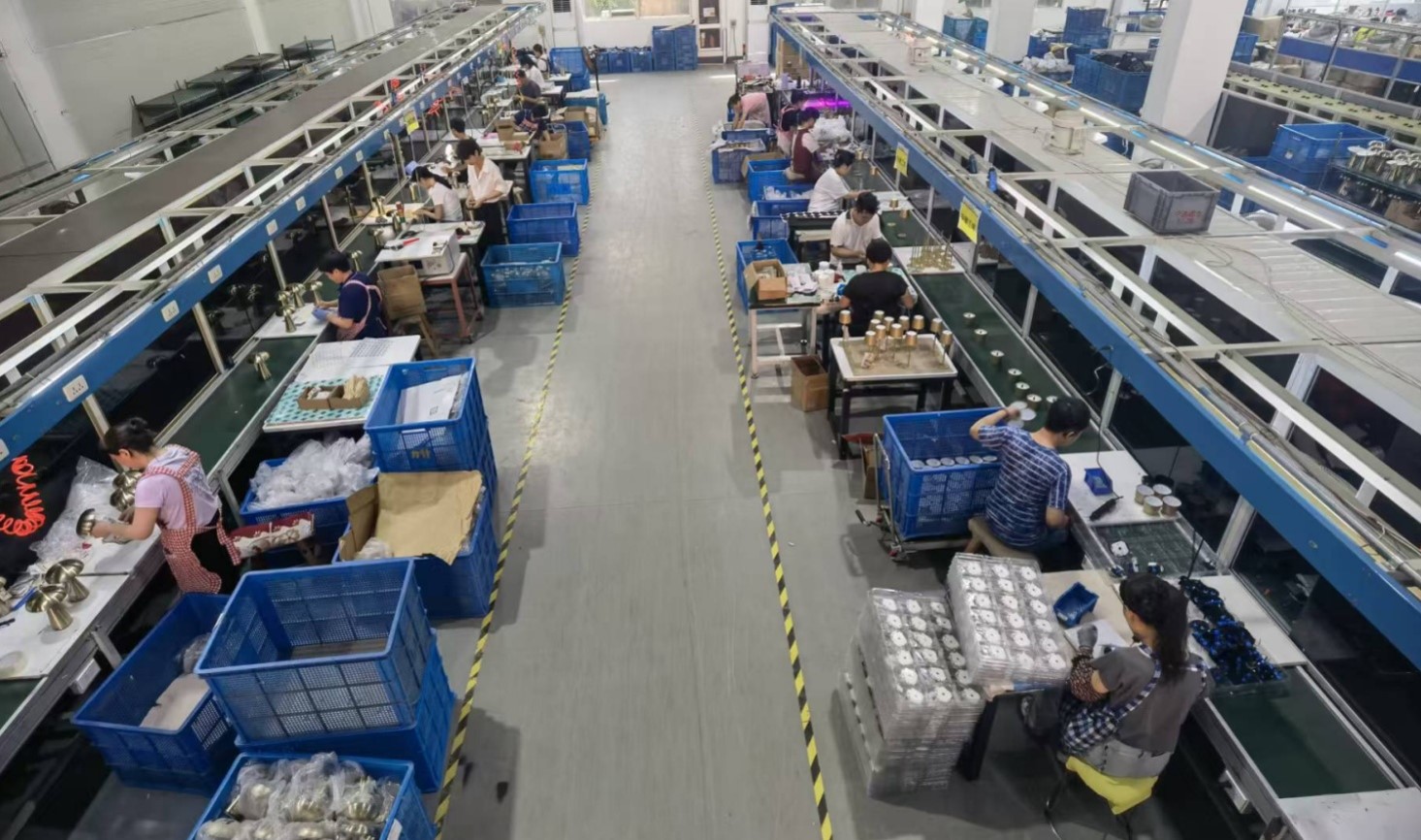
We produce outdoor lighting and electrical products in Ningbo for importers and distributors, and we would rather answer a compliance question before the order than after it. If you are importing for the EU market and want to discuss documentation, labelling or the responsible-person arrangement for your range, contact us and tell us the destination markets. You can also review our full product range to see where the discussion applies.
For the battery-specific obligation that many rechargeable products face from February 2027, see our note on the Article 11 deadline for rechargeable LED lamps.
about
Symbol Industrial
Supplier of outdoor lightings and electric products in China.

blog tags
related posts
September 23, 2026