
Somewhere between the first frost and the first January storm, the season writes its own product testing programme for outdoor lighting – and it runs it on your customers’ installations, not in a lab. That is why returns in this category do not arrive evenly through the year. They arrive in spring, carrying a common set of failure stories: water inside a lens that “was sealed”, a housing that cracked, a fitting that dimmed to half brightness after one coastal winter, a solar string that stopped lighting by November.
Very few of those failures are what they look like. Most of them trace back to four stress factors that an IP rating on its own does not cover: cold, condensation, salt and UV. This article walks through each one, using the numbers we actually publish for our own outdoor range, and ends with the checklist we would suggest attaching to your next winter RFQ.
The ratings we publish – and what they actually mean
First, the facts on the table. Every outdoor family in our range carries a published IP rating, and they are not all the same – deliberately:
| Family | Models | IP rating | Housing | Published ambient |
|---|---|---|---|---|
| LED floodlights, 10–100 W | D-101D … D-1003D | IP65 | Aluminium + toughened glass | — |
| Garden post light, 12 W | CQ-03 | IP54 | PA6+PC, aluminium post | — |
| Rechargeable floodlights, 20/30 W | CD-203E / CD-303E | IP54 | Plastic | — |
| Out-door dry box | DRI001 | IP54 | Plastic | — |
| Garden wall lights, 12 W | CQ-02 / CQ-02P | IP44 | PA6+PC | −10 to +40 °C |
| Garden lantern, 60 W E27 | K-001 | IP44 | Plastic, PC diffuser | — |
| Solar string lights, 5 V | LPL-S / PL-S series | IP44 | Plastic bulbs | — |

CQ-02: a 12 W wall-mounted garden light, 800 lm, IP44 — specified for installation at 1.8–2.5 m, which is a mounting decision as much as a protection decision.
Charted, the same table looks like this:
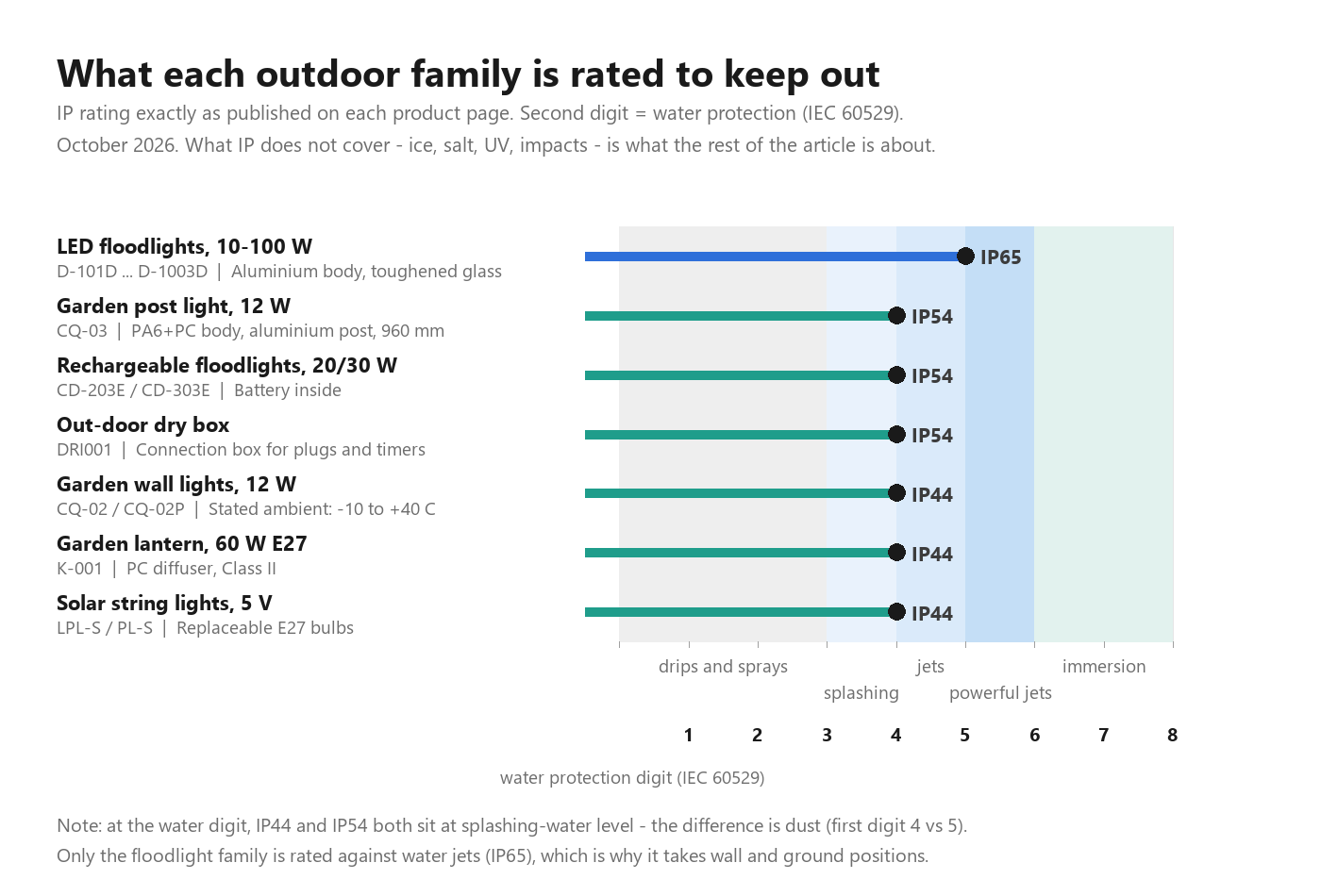
The water-protection digit (the second one) is what separates the range: only the floodlight family is rated against water jets; everything else sits at splashing-water level.
Two reading notes before the winter talk. Under IEC 60529, IP44 and IP54 are identical at the water digit – both mean splashing water – and differ in dust protection, where IP54 is the tighter grade. IP65 adds resistance against water jets, which is a different physical event: not rain drifting onto a wall, but a jet hitting a seal under pressure. We covered the full digit-by-digit breakdown, and what IP does not promise, in IP65, IP66 or IP67? How to Specify Outdoor LED Floodlights.
IP is a mounting decision, not a quality grade
The most expensive misunderstanding in this category is reading IP44 as “less well made” than IP65. It is a different installation contract. A wall light mounted at 1.8–2.5 m under a roof overhang – which is exactly where our CQ-02 datasheet places it – faces driven rain, not jets, and does not need jet resistance to survive ten winters. A floodlight screwed to a low garden wall, where a hose, a sprinkler or a pressure washer will find it, does.
So the winter question is not “is it IP65?” but “does the rating match where it will actually hang?” When buyers ask us for garden lighting, we would rather send the IP44 wall light and the IP54 post light to the right positions than win the order on a number that will fail in the wrong one.
CQ-03: the same light family on a 960 mm aluminium post, rated IP54 – one step up in dust protection for a position where the base sits in soil and mulch.
The temperature line on the datasheet
One line in our garden-wall-light datasheet gets skipped over in summer and becomes urgent in January: operating temperature −10 °C to +40 °C, operating humidity below 93 % RH. It is printed on the CQ-02 and CQ-02P pages for a reason. The housing material on those fittings is PA6+PC – engineering plastic and polycarbonate – and both families of plastic change behaviour as they approach the low end of that window: impact strength drops, gaskets stiffen, and a clip or a cover that flexed happily at +20 °C can crack at −15 °C when someone forces it.
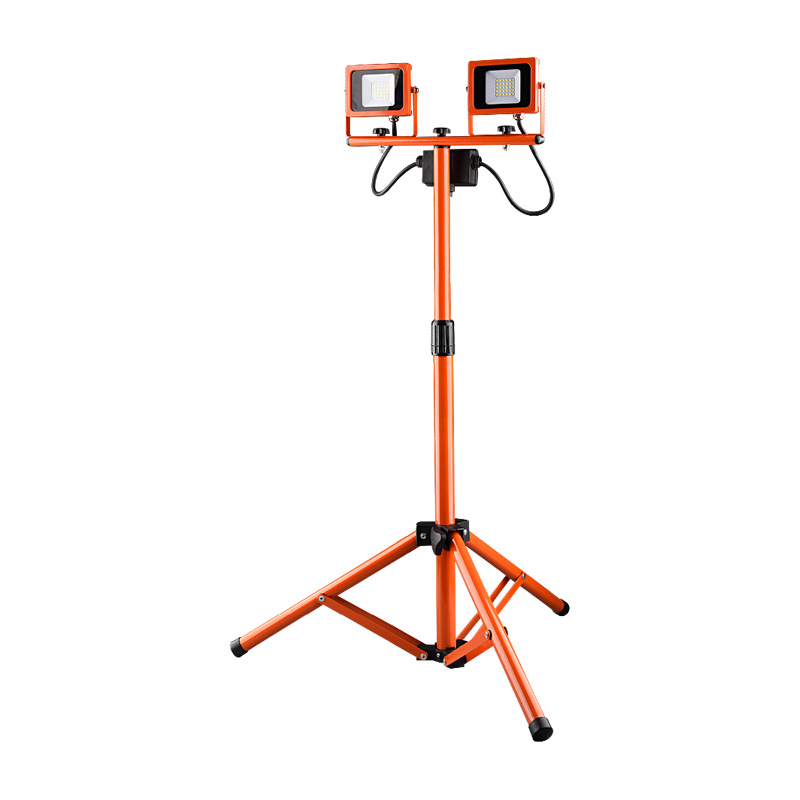
That line is also a market-matching tool. A garden wall light destined for a covered terrace in northern Spain is living a different winter from the same fitting bolted to a fence in Finland. If your market sees extended periods below −10 °C, that plastic wall-light family is the wrong specification regardless of brand or price – and the honest answer is to move the position to an aluminium-bodied floodlight (our D-series carries no stated low-temperature limit and an IP65 aluminium housing with toughened glass), or to accept the fitting only in sheltered, wall-mounted positions. Tell us the destination climate in the RFQ; it changes what we quote.

D-501D: aluminium body, toughened glass, IP65 – the family we point to when the installation has to shrug off the cold as well as the rain.
Condensation, not leakage, is what “looks like” a fault
Here is the failure your customers will describe as “it’s not sealed, there’s water inside” – when the fixture never leaked at all.
A sealed housing breathes. On a warm afternoon the air inside expands and pushes out through any imperfect seal; at night the housing cools, the air inside contracts, pressure drops, and humid air is pulled in. If that cycle runs through dew-heavy autumn evenings, moisture accumulates on the inside of the lens. No crack, no missing gasket – just physics, and a very unhappy end customer photographing droplets for the returns claim.
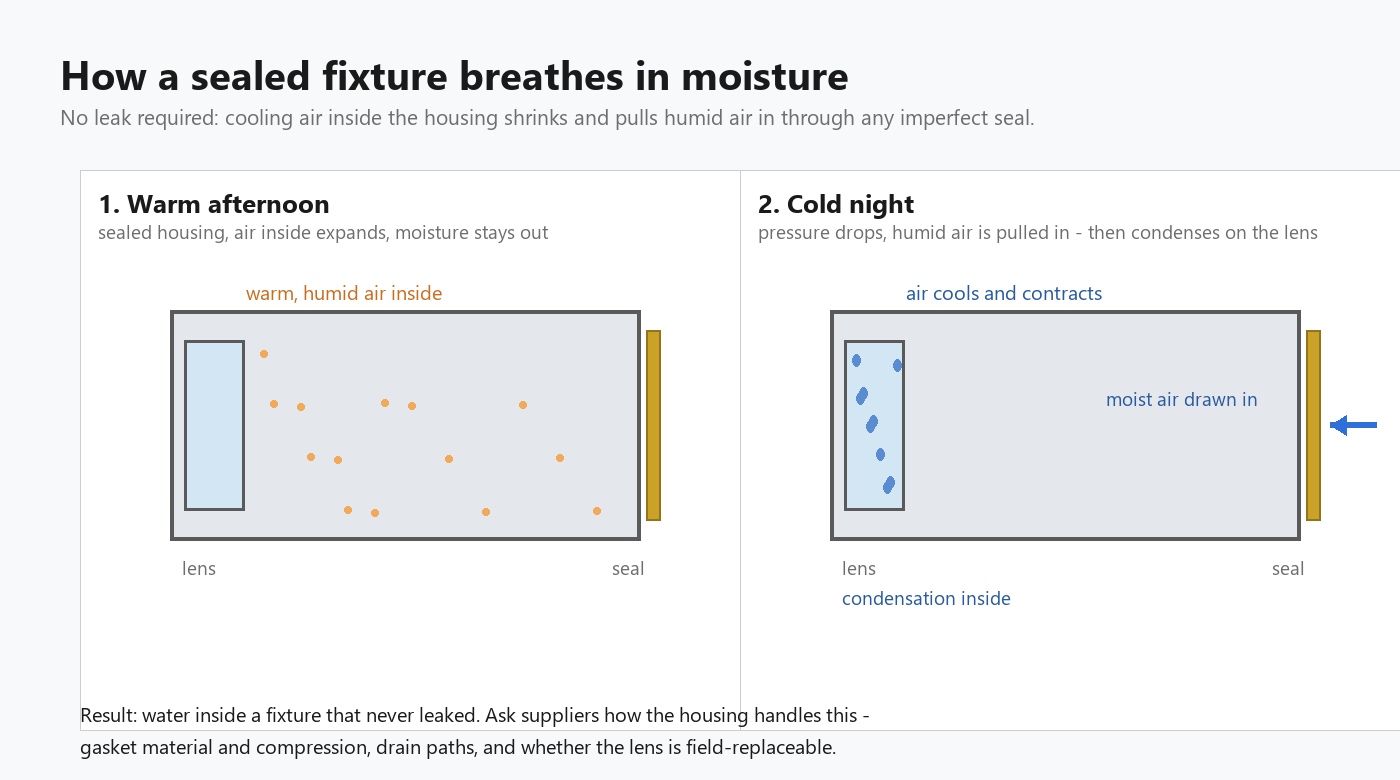
The two-day cycle that puts water inside a fixture that never leaked. The defence is in the details the datasheet rarely states: gasket material and compression, drain paths, lens serviceability.
Because the mechanism is thermal, IP rating alone does not settle it – a fixture can pass a jet test in the lab and still breathe in a wet maritime autumn. The questions worth putting to any supplier (including us) before a winter programme are the unglamorous ones: what is the gasket material and how is compression maintained, is there a drain or pressure-equalisation path, and can the lens or gasket be replaced in the field. Suppliers who can answer those three questions without hesitation have usually shipped through a few winters already.
Salt fog: the coastal variable
On a coast, winter durability stops being about water and becomes about chemistry. Salt spray settles on housings and creeps into fixings; when it dries and rewets with each cycle it attacks metal and works into fastener threads. Aluminium housings resist it far better than raw steel, and plastic housings do not corrode at all – which is one genuine advantage of the PA6+PC garden-light family in seaside installations, provided the UV side is handled (next section) and the fasteners are specified properly.
Salt-spray resistance is tested, and the test families exist (salt-mist cycling per IEC 60068-2-52 is the one buyers usually name). What matters commercially: a datasheet that does not state a salt-spray result is not evidence of one – ours included, at time of writing. If the project is coastal, put the requirement in the RFQ explicitly and ask what test data the supplier can produce. A supplier who says “no, we haven’t tested that” is more useful to you than one who says “don’t worry”.
UV: the stress that works in summer and bills you in winter
UV degradation is the quiet one, because it never causes the failure – it just loads the spring. Polycarbonate yellows and embrittles under years of irradiance; PA6+PC garden-light housings and the plastic diffusers on our K-001 lantern are exactly the material class where stabiliser quality decides whether the fitting looks acceptable in year five or looks tired in year two. The bill arrives in winter, when the embrittled housing meets the first frost or the first ladder touch and finally cracks.

K-001: a 60 W E27 garden lantern with a polycarbonate diffuser, Class II, IP44. For a plastic diffuser, UV stabilisation is the difference between year-five and year-two appearance.
The RFQ question is simple: “is the PC UV-stabilised, and to what test?” Southern-European buyers have as much stake in this as anyone – irradiance runs higher there even though the winters are mild, and yellowing respects no latitude.
The two battery questions winter always asks
Two of our outdoor families carry a battery or a panel into the cold, and each one has a winter-specific question attached.
Cordless floodlights (CD-203E / CD-303E). Lithium chemistry simply delivers less when it is cold, and a rechargeable floodlight left in a van or a tool shed overnight will wake up with noticeably less runtime than the datasheet number – that is the chemistry, not a defect. What actually protects the product is the charging rule: a cell that has sat below freezing should be allowed to warm to room temperature before charging. Write that into the user manual you supply with the product, because your customer’s customer will not invent it. And the compliance clock keeps running underneath: rechargeable lighting sold into the EU falls under the new Battery Regulation, including the user-replaceable-battery requirement with its February 2027 deadline – a cordless programme started now should have that date inside the plan, not in the appendix.
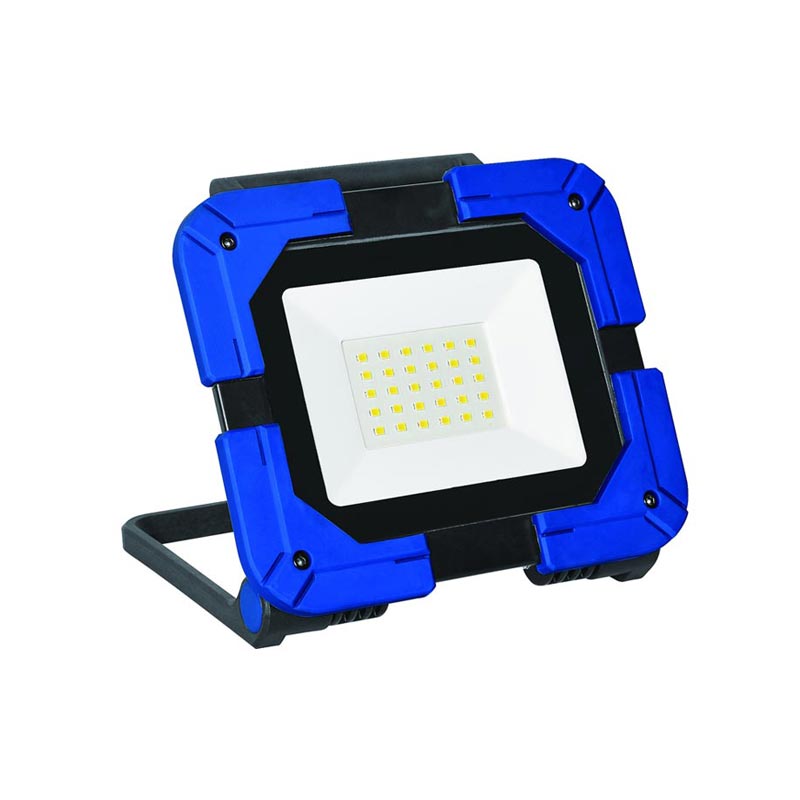
CD-203E: 20 W, IP54, battery on board. Its winter enemy is not water – it is the charging rule nobody reads.
Solar string lights (LPL-S / PL-S series). The arithmetic of a 5 V system is unforgiving in November: the panel is rated 4.5 V / 280 mA (about 1.2 W), the battery is a 3.7 V / 1200 mAh 18650, and the ten E27 bulbs draw 0.3 W each. Short winter days mean less charge going in while evenings run longer – so the honest specification conversation is about expected winter runtime, not summer showroom performance. The design features that matter for durability are the ones already built into the series: replaceable bulbs (a failed bulb is a 30-second fix rather than a returned string, with S45, A60, G80 and C35 options in the solar string light range), and string-to-string connection – up to three sets on one panel – which concentrates the electronics in one sealed control box instead of three.

LPL-S-10-S45: 10 replaceable E27 bulbs on 8.4 m of cable, IP44, with the panel and battery in one control box. Serviceable by design – the winter-friendly way to build a string light.
The weak link is usually the connection, not the fixture
Ask a maintenance team where garden and site lighting actually fails in winter and the answer is rarely the lamp head. It is the joints: a plug lying in a puddle, a timer in a damp shed corner, an extension socket cable-gland that was never really a gland. The fixture with the IP65 housing can be defeated entirely by the connection three metres down the cable.
That is the gap our out-door dry box exists to close: an IP54 enclosure, 335 × 220 × 120 mm, sized to hold plugs, connectors and timers off the ground and out of the splash zone. For winter programmes it is the cheapest line in the container and the one that removes the most support tickets – put the connection in a box, lift the box off the soil, and the “faulty fitting” calls shrink.
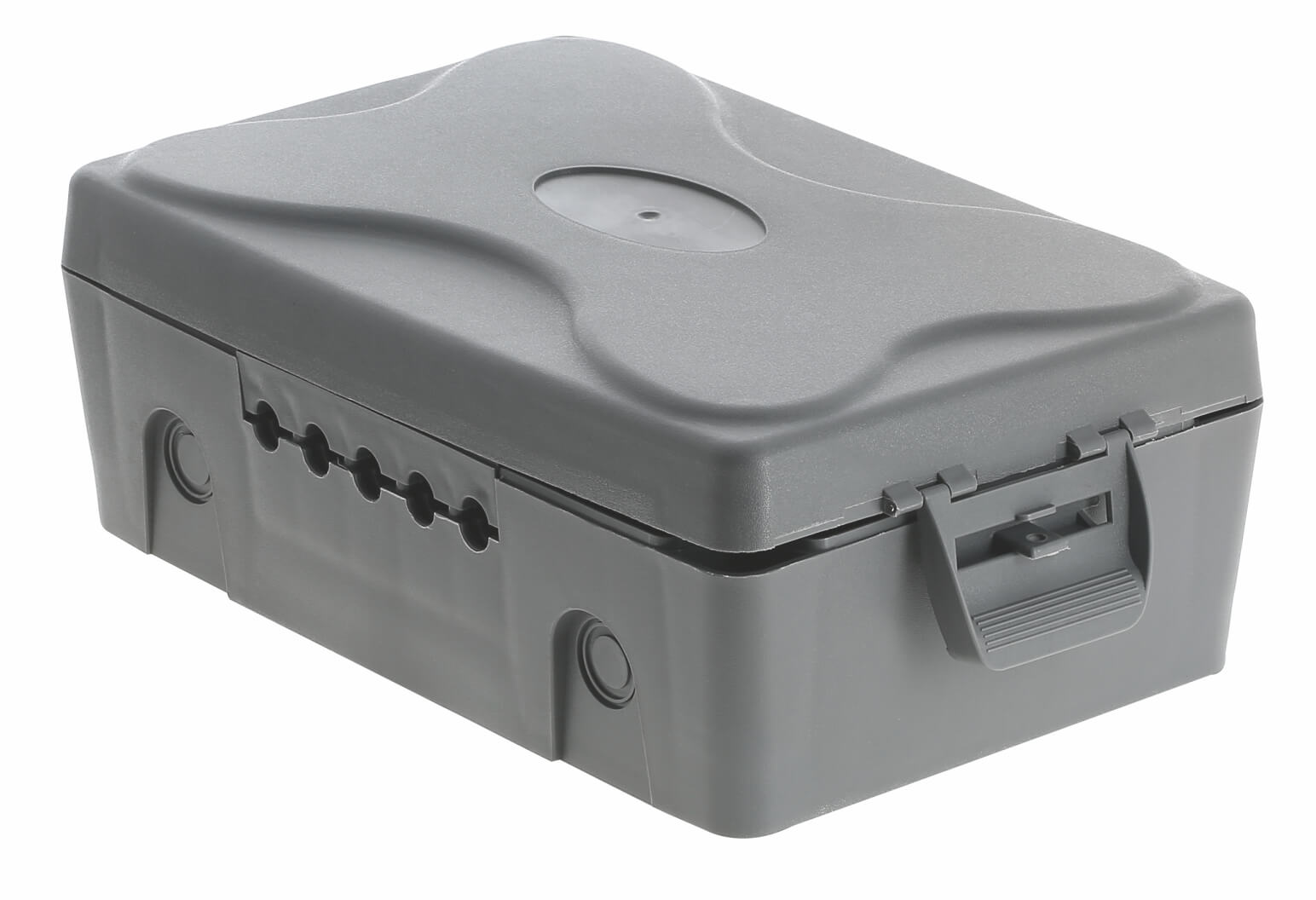
DRI001: an IP54 dry box for the plugs, connectors and timers that a rainy week would otherwise find first.
One more winter note on that theme: anything with a motion sensor spends winter doing more switching than it did in summer – long dark hours mean the PIR in our CQ-02P wall light (120° detection, max 8 m at the datasheet condition, adjustable from about 8 seconds to 8 minutes, with a 10–2000 lux threshold) cycles hundreds of times a night where it cycled dozens in June. Relays and sensor circuits are sized for that duty, but it is exactly the kind of specification detail worth confirming when the fitting will live on a dark coastal driveway rather than a suburban porch.
The winter checklist to attach to the RFQ
Everything above compresses into eight lines. Attach them to the enquiry and quotations become comparable:
- Destination climate – the real one: average winter minimum and how long it stays below −10 °C, if it does.
- Mounting position per SKU – under eaves at 1.8–2.5 m, on a low garden wall, on a post in soil. The IP number follows the position.
- Gasket and drainage – gasket material, compression retention, drain or pressure-equalisation path, field-replaceable lens.
- Coastal or not – if within salt-spray range, ask for salt-mist test data (IEC 60068-2-52 family) rather than assurances.
- UV stabilisation – is the PC UV-stabilised, and to which test?
- Mechanical (IK) – snow load, strimmers, footballs. Ask for the IK rating per IEC 62262; if a supplier has none, factor that into the mounting position.
- Battery rules in the manual – warm-before-charge wording for cordless products, and the 2027 battery-regulation plan for anything rechargeable.
- The connections – specify the dry box and cable management in the same order, because that is where winter actually gets in.
What we build
We are a lighting manufacturer in Ningbo. The families in this article – garden wall, post and lantern lights, IP65 floodlights from 10 W to 100 W, solar string lights with replaceable bulbs, rechargeable floodlights and the IP54 dry box – are what we make, and the figures quoted here are the ones we publish on our product pages.
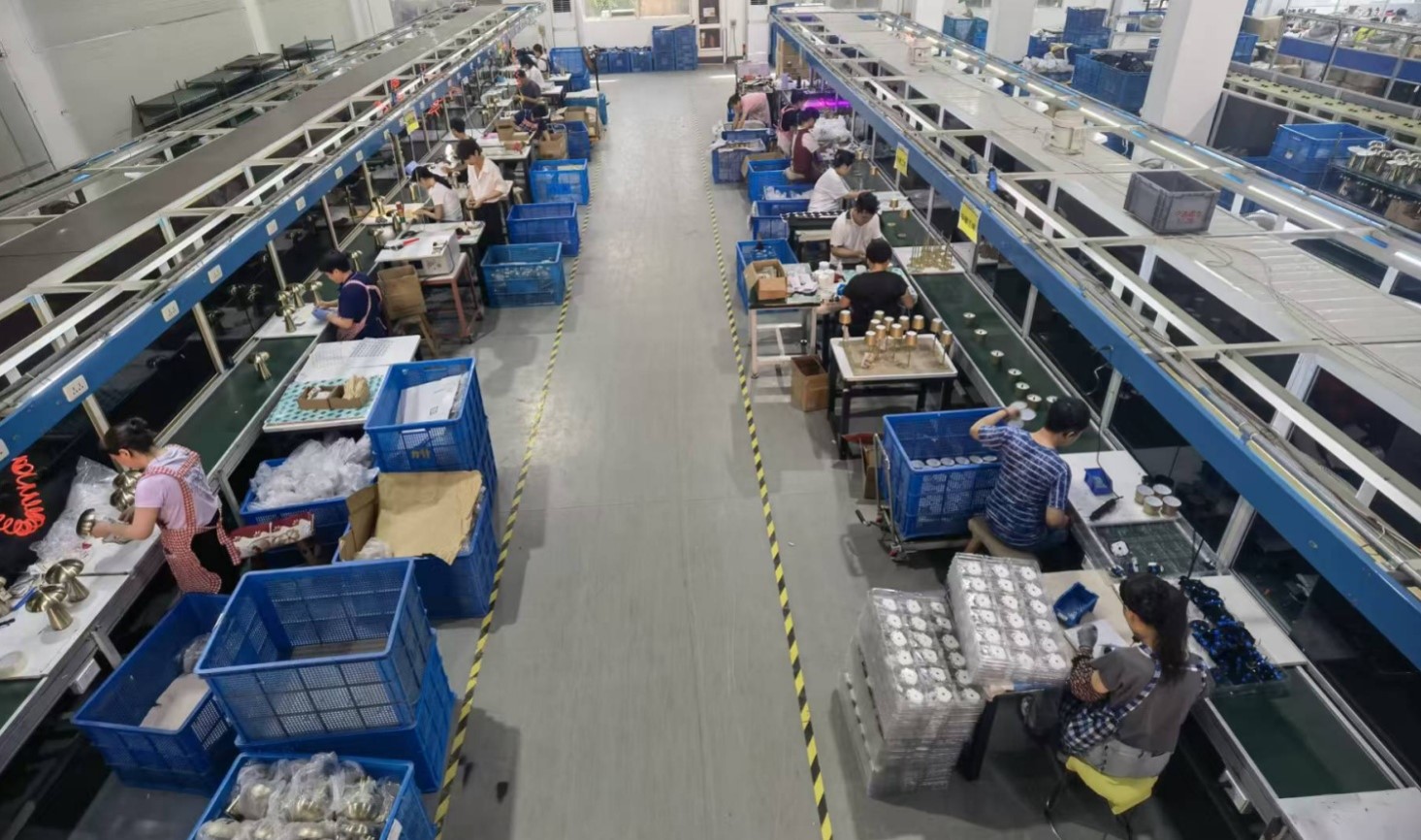
Assembly line in Ningbo. Send us the winter checklist with your destination market filled in, and we will tell you which of our fittings we would not sell you for that climate – and which one we would.
If you are matching formats to applications rather than climates, the work light vs floodlight guide covers the mounting-and-power decision; this article covers what winter does to whatever you mount. Send the checklist, and we will come back with the specification – including the limits.
about
Symbol Industrial
Supplier of outdoor lightings and electric products in China.
blog tags
related posts

September 23, 2026