Ask three suppliers for a “work light” and you will get three different products. One will send a handheld unit with a folding frame, one a floodlight on a telescopic tripod, one a 200 W high bay with a hook on top. All three are answering the same request, and only one of them is right for your customer’s site.
The confusion is not the buyer’s fault. “Work light”, “floodlight” and “high bay” are used loosely across the trade — in some markets the same 20 W fixture is listed as a portable floodlight on one page and a site work light on the next, which is exactly how we list ours. Names are a marketing problem. Mounting and power are a returns problem.
So this article separates the formats by the two things that actually decide whether a fixture works on site: how it is mounted, and where its power comes from.
The four formats, in one table
| Format | Mounting | Power | Output in our range | Suited to |
|---|---|---|---|---|
| Portable work light | Folding frame — stands, hangs or wedges | Mains cable | 20–100 W · 1,800–9,000 lm | Task lighting that moves with the job |
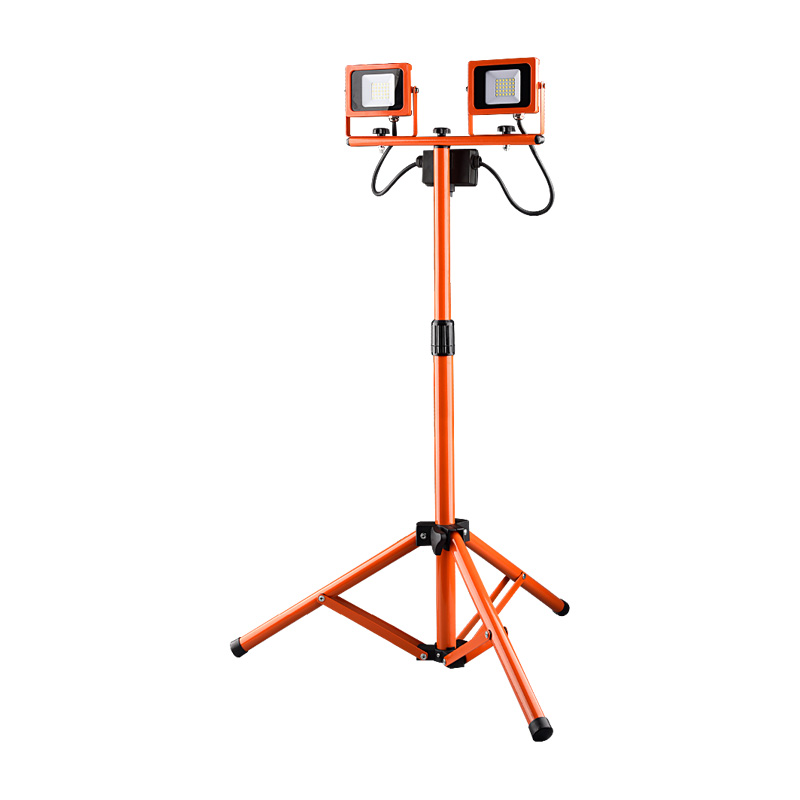
| Tripod work light | Telescopic tripod, 1.2–1.6 m | Mains cable | 10–40 W · 900–3,600 lm | Lighting a work zone from above |
| Fixed floodlight | Wall or post bracket | Hard-wired or plug | 10–100 W · 900–9,000 lm | Perimeter, yard, signage, permanent area light |
| Floodlight with sensor | Wall bracket + PIR | Mains | 10–50 W · 900–4,500 lm | Unattended areas that only need light on demand |
| Cordless floodlight | On the ground or bracketed | Rechargeable battery | 20–30 W · IP54 | Work where there is no supply |
| High bay | Hook or bracket at 6 m+ | Mains | not part of our range | Warehouses and high-ceiling halls |
The rest of this article works through the formats we build, and then explains why the sixth is a different product family — and why a floodlight will not do a high bay’s job.
Portable work lights: the light that goes where the job is
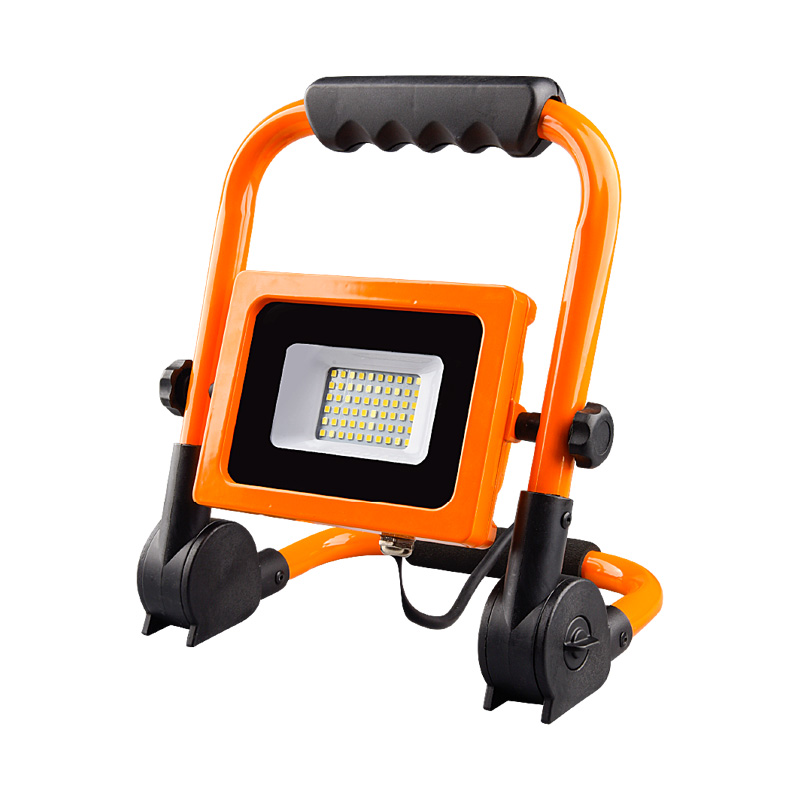
A 20 W portable floodlight (D-203D) — the folding frame is what makes it portable, not the handle.
A fixture with a folding frame can stand on the ground, hang from scaffolding, or be angled on a surface where nothing can be screwed in. That is the whole point of the format, and it is why this family dominates the tool-hire, service-vehicle and maintenance channels: the light is carried to the work, used for an hour or a shift, and packed back into the van.
Our portable range is built around an aluminium body, toughened glass and a foldable frame, in four sizes that share the same LED type and colour-temperature options:
| Model | Power | Output | Dimensions (H × W × D) |
|---|---|---|---|
| D-203D | 20 W | 1,800 lm | 280 × 250 × 185 mm |
| D-303D | 30 W | 2,700 lm | 290 × 285 × 185 mm |
| D-503D | 50 W | 4,500 lm | 365 × 305 × 205 mm |
| D-1003D | 100 W | 9,000 lm | 400 × 360 × 230 mm |
All four are rated IP65, run on 110–130 V or 220–240 V, and are available in 3000 K / 4000 K / 6500 K with a 120° beam.
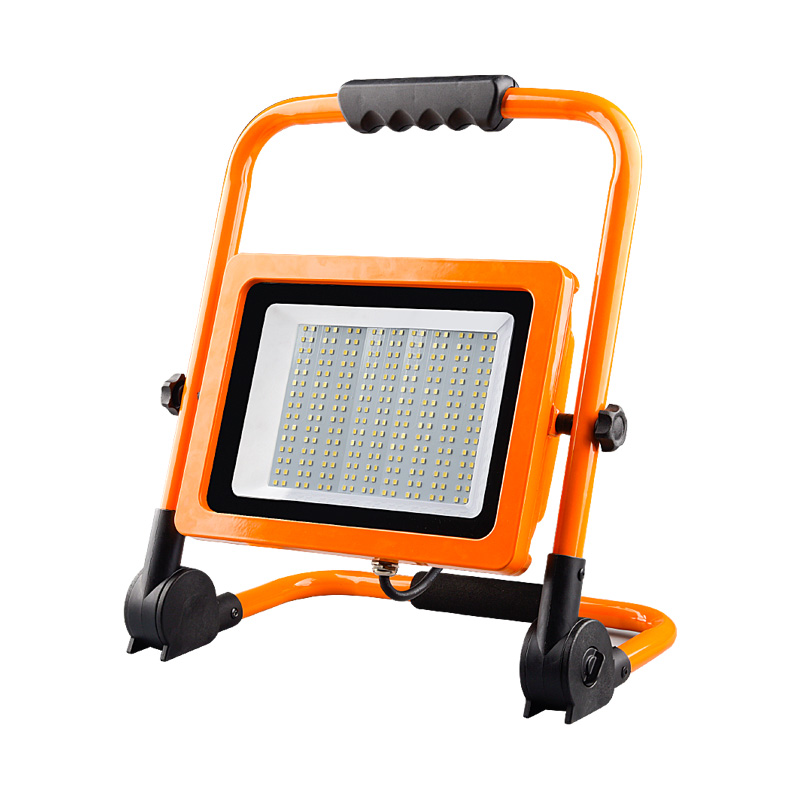
The top of the same family: 100 W and 9,000 lm (D-1003D), still folding flat for transport.
Two specification details deserve more attention than they usually get:
- The cable and the plug. A portable light is only as useful as its reach. Specify cable length and the plug type for the destination market — a UK site needs a BS 1363 plug, a German site a Schuko — and remember that in the customer’s mind the extension lead is part of the product. Our extension socket range exists because site lighting and site power are bought together, and getting the plug standard wrong is a returns generator, not a rounding error.
- The frame. “Foldable” describes a hinge, not a standard. Ask how the frame behaves after a season of open-and-close cycles, whether the hinge is field-replaceable, and how the unit is packed — a fixture that arrives pre-broken teaches your customer nothing good about your supplier.
Tripod work lights: area light where you cannot fix anything
Where the job is temporary but the light has to cover a zone — plastering, painting, night repair, a yard working late — a tripod does what a bracket cannot: it lifts the source above head height, spreads the light over the work area instead of into people’s eyes, and folds for the van.
Our tripod units share the same LED package as the portable range and differ mainly in head count and height:
| Model | Heads | Total power | Output | Tripod height |
|---|---|---|---|---|
| D-106D | Single | 10 W | 900 lm | 1,200 mm |
| D-107D | Twin | 2 × 10 W | 1,800 lm | 1,200 mm |
| D-206D | Single | 20 W | 1,800 lm | 1,600 mm |
| D-207D | Twin | 2 × 20 W | 3,600 lm | 1,600 mm |
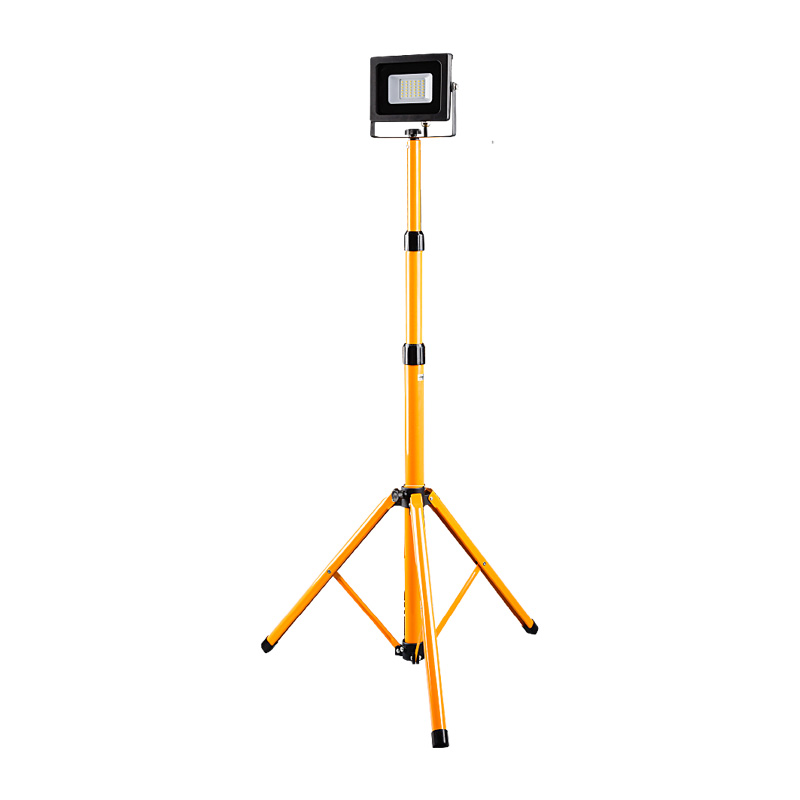
D-206D: a single 20 W head on a telescopic tripod that reaches 1.6 m.
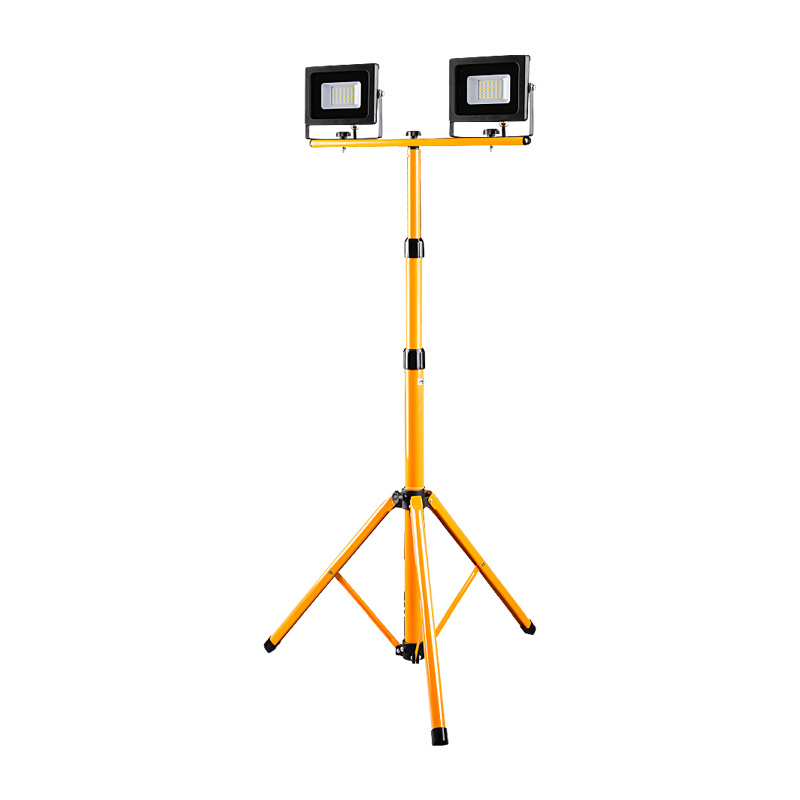
D-207D: two heads, two directions, and a shadowing problem largely solved.
The twin-head versions exist for a practical reason, and it is worth explaining to your own customers: with two independently angled heads you can light two directions at once, or push light into the corner that a single 120° beam flattens out. On a site with four people working around a vehicle, the difference between one beam and two is the difference between a bright wall and a lit workspace.
When you compare tripod units across suppliers, check three things that never appear in a headline: the locked height (not the marketing height), the tripod footprint and how it behaves on soft ground, and whether the head detaches from the tripod — because the day a customer discovers the head is a usable handheld light is the day they stop complaining about the price.
Fixed floodlights: where the light should stay
The third format is the one most buyers already know: a bracket-mounted floodlight that is installed once and stays. Our fixed range runs from 10 W to 100 W in the same housing family, all IP65, all with the same colour-temperature options:
| Model | Power | Output | Dimensions (H × W × D) |
|---|---|---|---|
| D-101D | 10 W | 900 lm | 115 × 135 × 25 mm |
| D-201D | 20 W | 1,800 lm | 150 × 180 × 35 mm |
| D-301D | 30 W | 2,700 lm | 175 × 215 × 35 mm |
| D-501D | 50 W | 4,500 lm | 195 × 235 × 40 mm |
| D-1001D | 100 W | 9,000 lm | 235 × 295 × 40 mm |
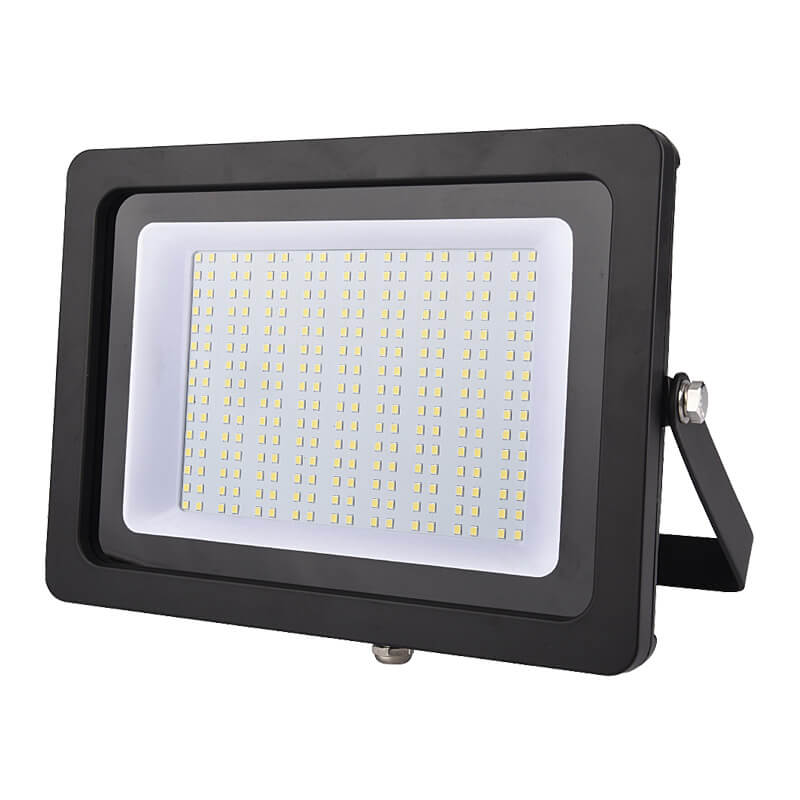
D-1001D: the 100 W fixed floodlight — same optics as the portable and tripod units, bracket instead of a frame.
A PIR-sensor variant exists at 10, 20, 30 and 50 W (D-102D, D-202D, D-302D, D-502D), and it belongs to this family rather than to the portable ones:
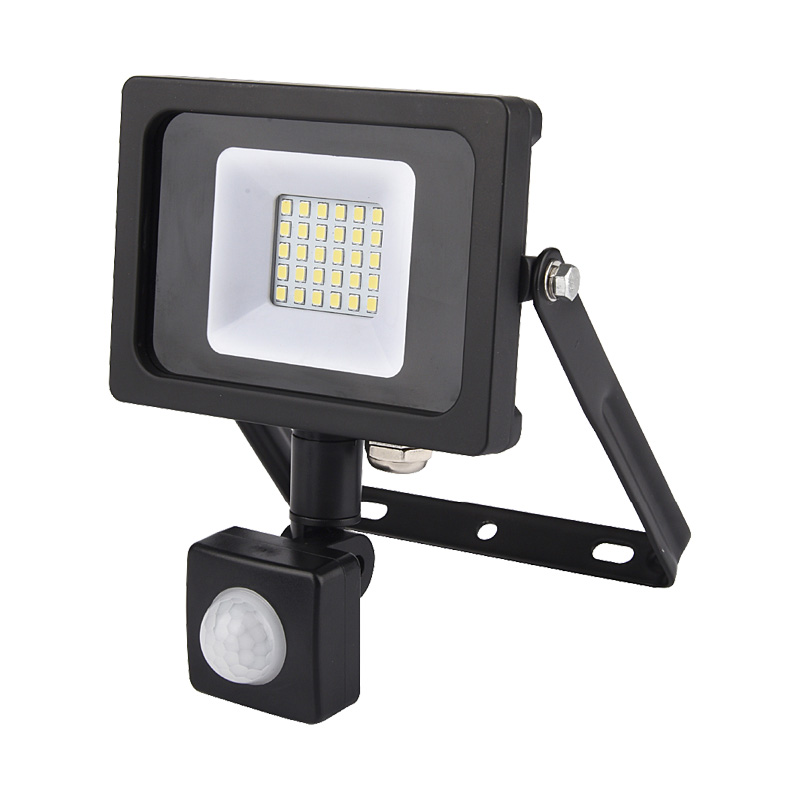
D-102D: the sensor variant. Worth specifying for unattended areas, wrong for a light someone is working under.
That distinction matters commercially. A sensor on a work light — a fixture a person is standing next to, holding, and pointing — is a solution looking for a problem. A sensor on a perimeter or yard fitting, which should be off most of the night and on when somebody walks in, saves real energy and is what your customer’s end user actually expects. Put the sensor where the light is unattended, and leave it off where a human is.
If the installation is outdoors and permanent, the ingress question gets more demanding than IP65: wash-down areas, coastal sites and immersed fixtures each need a different answer. We covered how to read the rating, and what IP does not cover, in IP65, IP66 or IP67? How to Specify Outdoor LED Floodlights.
Cordless: when there is no supply at all
The fourth format trades output and ingress protection for independence from the mains. Our rechargeable units — CD-203E at 20 W and 1,700 lm, CD-303E at 30 W — run from an onboard battery, charge from AC 100–240 V, and are rated IP54 rather than IP65.
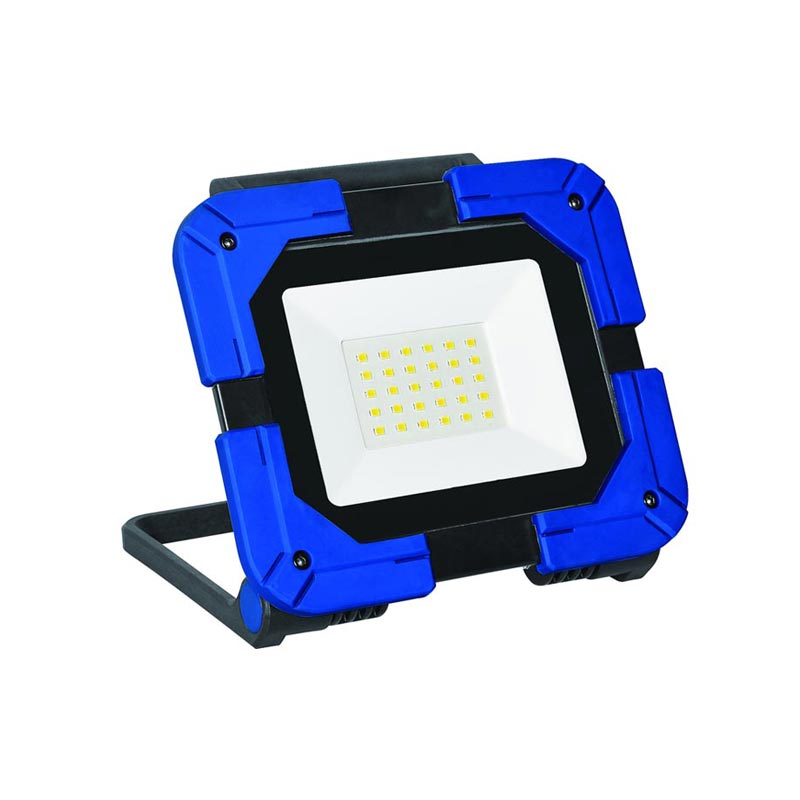
CD-203E: 20 W, 1,700 lm, IP54. The IP54 rating is the honest trade-off for the battery inside.
Two things to be straight about when you quote these:
- IP54 is splash protection, not jet protection. It is the right rating for a fixture that gets used outdoors and put away, and the wrong rating for one that gets hosed down. We would rather lose the order than see the fixture fail in a car wash.
- The battery brings its own compliance clock. Rechargeable lighting sold into the EU is moving under the new Battery Regulation, including the requirement that users can replace the battery themselves — the deadline is 18 February 2027. Any cordless lighting programme you start now should have that date in the plan, not in the footnotes.
What about high bays?
A high bay is not a bigger floodlight. It is a fixture engineered to be mounted at roughly 6 m and above, in warehouses, production halls and sports facilities, with narrower optics that put light on the floor rather than into the racking, and a mounting method — hook, chain, or a fixed bracket aimed downward — that assumes nobody will ever carry it anywhere.
You cannot substitute a floodlight for one. A floodlight hung at 10 m produces a wide, dim wash with glare at eye level and no useful light on the task, and no amount of wattage fixes an optics problem.
We build the four formats above, not high bays, and we will say so when an enquiry is really a high-bay project. A supplier who claims one housing family covers every mounting height is telling you something about how they will handle the next specification disagreement too.
Choosing in five questions
If you only have the application and no specification yet, these five answers pick the format:
- Can the fixture be fixed in place? No — nothing to screw into, or the job moves → portable work light.
- Is there a mains supply at the point of use? No → cordless. Yes, and you need to cover an area → tripod or fixed floodlight.
- How high is the mounting point? Under ~2.5 m and handheld → portable. Between ~2.5 m and 6 m → tripod or fixed floodlight. Above ~6 m in a hall → high bay (not this range).
- Task or area? A bench, a wheel, an engine bay → portable. A zone that several people share → tripod. A perimeter that never moves → fixed floodlight.
- Will it be washed down, submerged, or sit on a coast? Then IP65 is a floor, not an answer — see the IP specification guide, and ask for IK and corrosion data as well.
The numbers to put in the RFQ
Whatever format you land on, the comparison across suppliers only works if the same lines are quoted. The figures below are the ones we publish for our own range; put your equivalents in the same shape and three quotations become comparable.
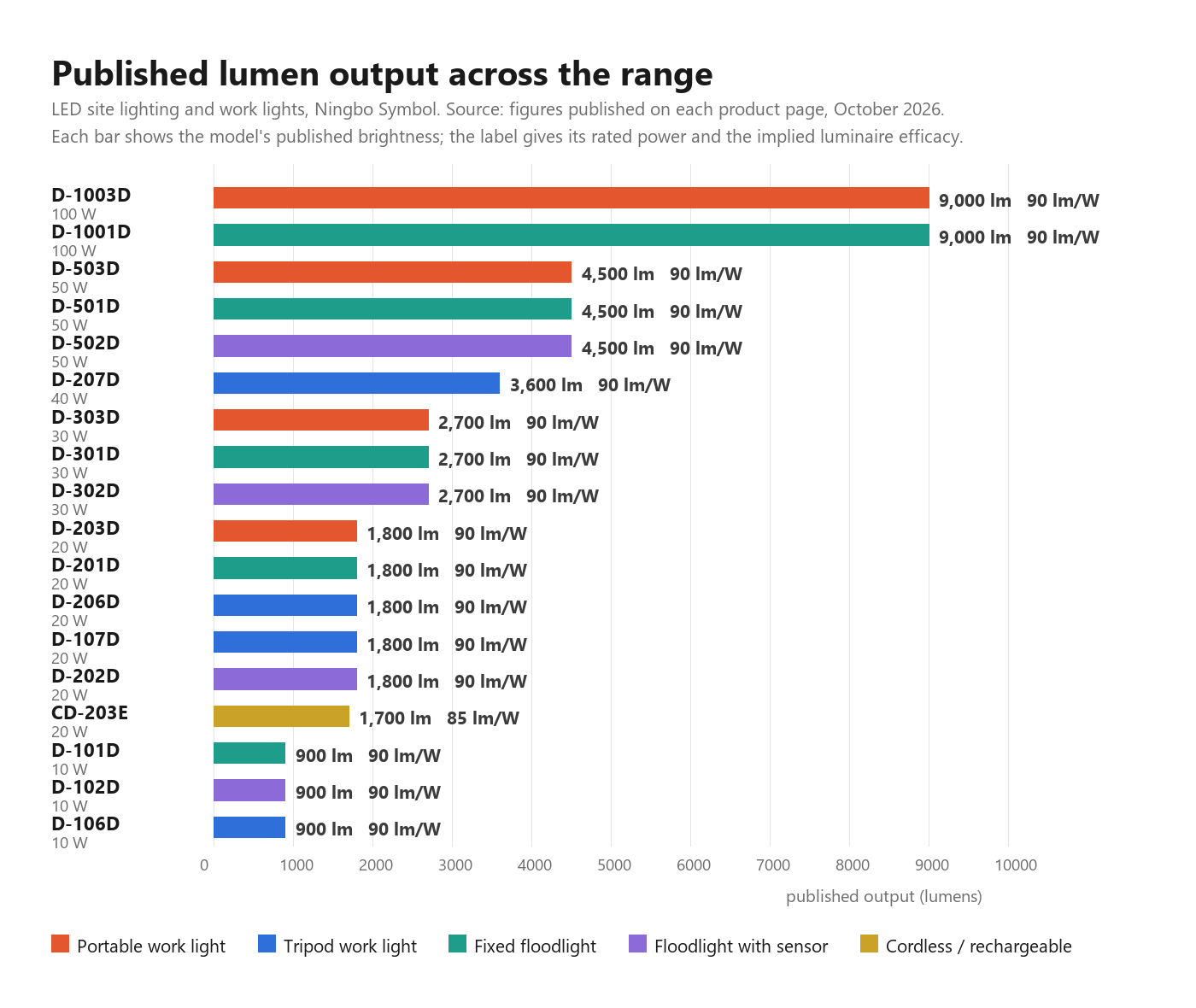
Published output across the range, from the figures on each product page. Every mains model in the chart lands near 90 lm/W, which is the number to hold suppliers to.
Two notes on that chart:
- Luminaire efficacy, not LED datasheet efficacy. Our published figures work out at about 90 lm/W for the mains range and 85 lm/W for the rechargeable 20 W unit — that is luminaire output divided by luminaire power, which is the only version of “efficacy” that shows up on your customer’s electricity bill. Ask any supplier which one their number is.
- A lumen figure is not a lifetime claim. Each of these fixtures is specified at 30,000 hours, but the useful question is what that is based on — LED package test data with a projection, or a round number. Ask for the LM-80 data and the projection method behind it, and treat a supplier who cannot answer as a supplier who has not tested.
What we build
We are a lighting manufacturer in Ningbo, and the four formats above are what we make: portable, tripod and fixed LED floodlights and work lights, with the complete work-light range listed separately for buyers who arrive looking for exactly this article.
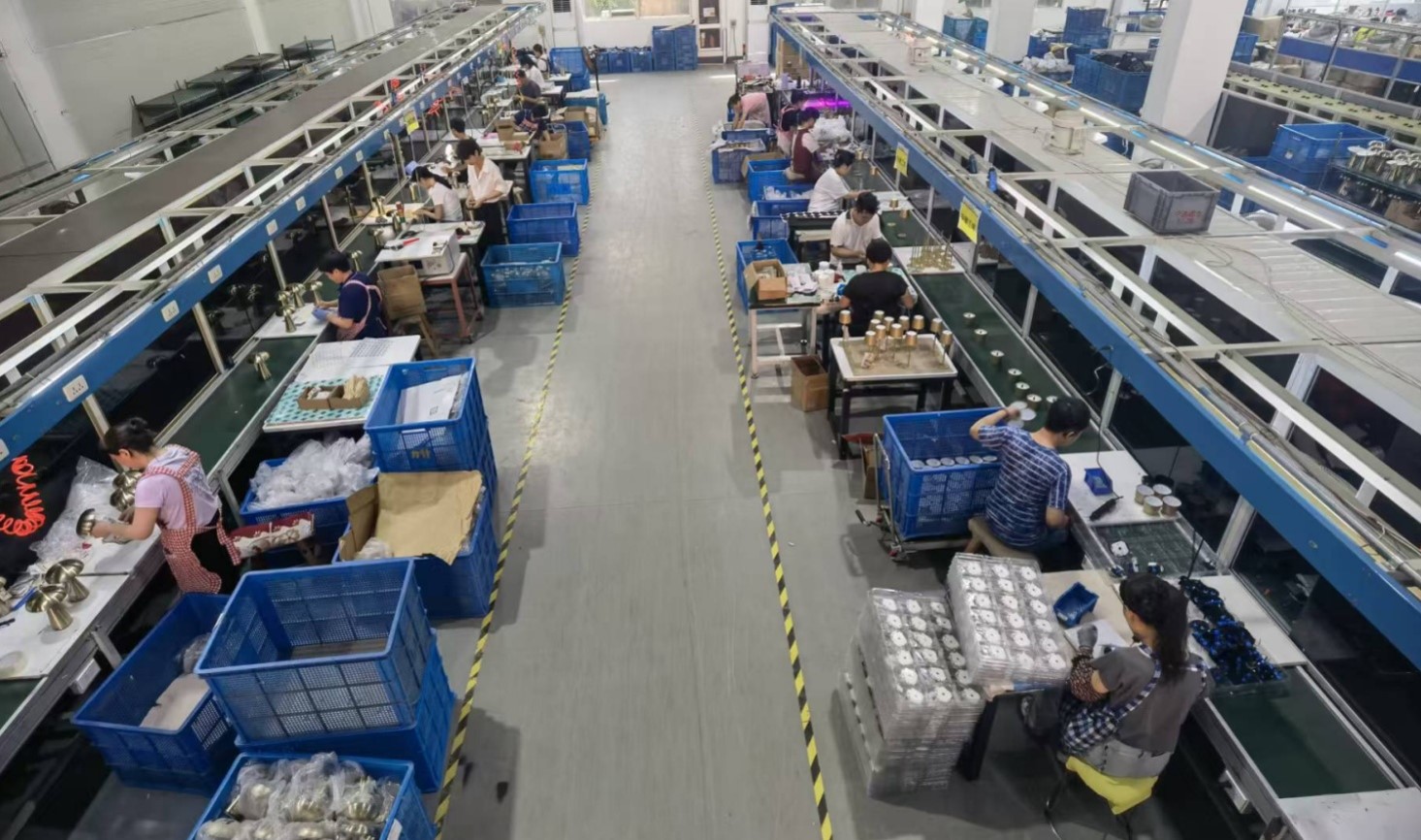
Assembly line. If you send the five answers above plus the output and colour temperature you need, we will come back with the format, the specification and the honest limits of what we build.
Alongside the lighting we manufacture the UK-type and German-type extension sockets that site lighting is normally plugged into — the same plug standards you will need to specify on the fixtures themselves.
If you would like the format matched to your application, send us the five answers, and we will reply with a fixture and the reasons it is not something else.
about
Symbol Industrial
Supplier of outdoor lightings and electric products in China.